Time to Move Forward on Cap-and-Invest

Last year saw a string of costly extreme weather events fueled by climate change across New York, including record rainfall, flash flooding, and tornadoes in upstate communities. This past August Tropical Storm Debby’s remnants caused flash flooding and widespread damage in the Finger Lakes.

These events altogether caused over $1 billion in damages in New York in 2024. In the face of escalating costs, by implementing a good cap-and-invest system, the state has an important opportunity to bring in much-needed funds to pay for climate damage going forward, while also reducing emissions from major polluters.

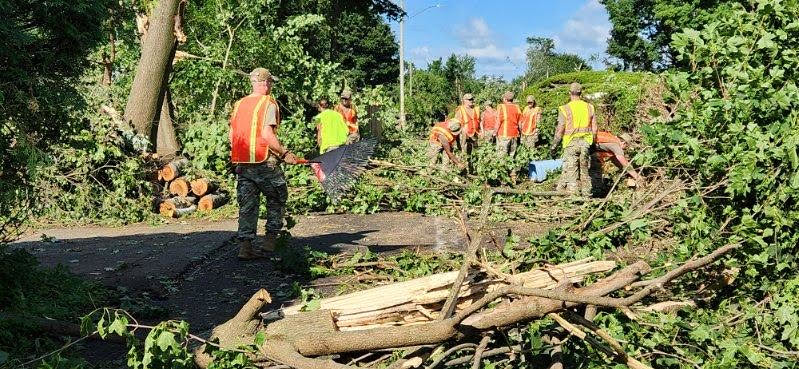
New York Air Guard Airmen help clear debris in Rome, NY following tornado in July 2024. The state National Guard activated 60 soldiers and airmen to help clear debris in the city. Courtesy photo by Major Ryan Marquette.

A Strong Cap-and Invest Program Needed

A strong cap-and-invest program will impose limits on the amount of emissions allowed by polluters and charge them to do so. With those funds, New York can more seriously invest in upgrades to homes to make them more energy efficient and run on clean, renewable energy while also boosting our local economy.

These measures will be especially important as residents absorb the costly increases in energy charged by NYSEG and other state utilities.

The Time for Delay is Over

Cap-and-invest is critical to meeting the targets of the state’s Climate Law. It also ensures New York can provide the level of investment necessary to make energy affordable while also boosting our economy.

Done the right way, Gov. Kathy Hochul, the DEC, and NYSERDA can lead New York into a new year that makes corporate polluters pay. At the same time, cap-and-invest could unlock billions of dollars for investments that drive sustainable economic development, increase energy efficiency, improve public health, and direct funds into neighborhoods to support community-led clean energy transitions.

Unfortunately, while draft regulations were originally due to be issued by now, with revenue beginning to flow by later in the year, Gov. Hochul recently announced that draft regulations won’t be issued until the end of 2025, and even then it appears these will only be partial.

Gov. Hochul’s delay in rolling out the program’s regulations ignores the urgency of the moment: the climate emergency has arrived and we must deal with it immediately. By continuing to stall, the governor increases the burden on disadvantaged communities, worsens harmful emissions, and allows polluters to go unchecked.

The governor first promised the cap-and-invest program over two years ago as the foundation of New York’s climate strategy. Now it appears that instead of promised regulations, we will see at least another year of delays. This move is part and parcel of a growing legacy of inaction and broken commitments on the most urgent crisis of our time.

We need leaders in Albany who are willing to take bold, decisive action to cut air pollution and lower greenhouse gas emissions. It is time to push for faster action from Gov. Hochul. Especially with a new administration in Washington actively hostile to climate policy, and with the state’s utility rates skyrocketing, it is critical that the cap-and-invest program be implemented as soon as possible.

In doing so, we can protect the residents of Ithaca and Tompkins County, as well as future generations, from the most harmful effects of the climate crisis.

Time for New Leadership on Climate and Energy

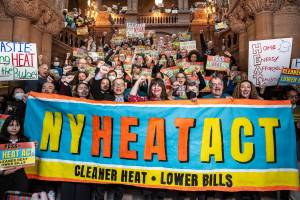
With the coming change in administration in Washington, it’s safe to say we’ll be seeing some dramatic shifts in climate and energy policy, none of which is likely to result in lower greenhouse gas emissions. Consequently, it is critical that local communities and states step in to lead the way on climate resiliency and adaptation, as well as the clean energy transition. Given the huge transformation of the political landscape at the national level, New York must move forward decisively. The biggest indication that it will do so would be if Governor Hochul signs the Climate Change Superfund Act passed at the end of the last session. This act adopts the “polluter must pay” principle. The fossil fuel industry has known for decades that its product is responsible for the climate damage we’ve experienced, and through its campaign of misinformation and outright deception it has avoided accountability. It is time for this to stop. The bill doesn’t ask Big Oil to pick up the entire tab, just a fair share of it. Taxpayers should not have to cover the entire cost of destruction caused by the fossil fuel industry. Besides the Climate Change Superfund Act, unfinished business from the last session includes the NY HEAT Act, which seeks to eliminate subsidies for new gas hookups, eliminate the “obligation to serve” gas to neighborhoods, and ensure that no low-income household would pay more than 6% of its income for energy. The NY HEAT Act passed in the Senate this year by a wide margin, but never came to a vote in the Assembly due to the controversy over congestion pricing that erupted in the final days of the session. Another big piece that needs to be put in place is the Cap and Invest Program. By applying a price to the amount of pollution, the Cap and Invest Program incentivizes consumers, businesses, and other entities to transition to lower-carbon alternatives. Assemblymember Anna Kelles (D -125th District) is the lead sponsor on a version of this program that would put in place guardrails to keep it from devolving into a vehicle for cap and trade, and would also ensure that an appropriate share of the revenue raised by the program goes to projects in frontline communities. As Kelles points out, the Climate Change Superfund Act and the Cap and Invest Program work together, with the former addressing past damage and the latter looking forward to future destruction incurred as a result of carbon pollution. Together with the NY HEAT Act, adoption of this legislation would send a strong message to Washington and the other states that progress on the climate and clean energy transition cannot be stopped.

Accountability and Climate Change in Albany

It’s that time of year in Albany when a wave of bills sweeps ashore in the New York State Legislature, among them a number of critical climate and energy transition measures.

The big question on the minds of climate and environmental activists and their legislative allies is pretty straightforward: to what extent is Governor Kathy Hochul committed to fulfilling not just the letter but the spirit of the state’s 2019 Climate Leadership and Community Protection Act (CLCPA)?

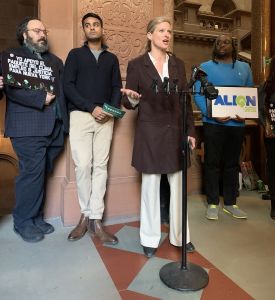
Assemblymember Anna Kelles speaking at a NY Renews rally in January. Photo courtesy of NY Renews.

Uncertainty and Anziety
Close on the heels of this question is a related issue: the State Climate Action Council has developed a substantive, thoughtful roadmap for meeting the ambitious goals of the CLCPA, but it remains unclear how energetically the governor intends to pursue it.

Feeding this sense of uncertainty are the challenges facing the rollout of utility-scale renewable energy projects in New York. As Marie French points out in a recent article, recent setbacks in developing industrial wind and solar have raised serious doubts about the state’s ability to meet the demands of the Climate Law, which requires that 70 percent of New York’s power come from renewable sources by 2030.

Finding a Solution
At the same time, extreme weather events attributable to climate change have been escalating, creating a palpable sense of urgency about the need to find a solution. As Raya Salter, a member of the Climate Action Council and founder of the Energy Justice Law and Policy Center, puts it, “The stakes are higher than ever so the governor needs to be willing to step out and make sure that we fully implement the CLCPA.”

There is certainly no shortage of suggestions about how to do this. One of the boldest set of proposals before the legislators is the Climate, Jobs, and Justice Package (CJJP) advanced by NY Renews, a coalition made up of over 370 environmental, justice, faith, labor, and community groups, including TCCPI.

The CJJP has three main components: 1) fully fund the CLCPA so that it can achieve its objectives; 2) build renewable energy for all and create green union jobs; and 3) hold polluters accountable and ensure everyone pays their fair share in taxes. Here are the details about how this would be accomplished:

  • The People’s Climate Justice Budget is a $1 billion spending plan that outlines critical climate and environmental justice programs that would constitute a downpayment on the more than $10 billion a year the state estimates is necessary to address the climate crisis. It builds on the creation of the Climate Action Fund (CAF) in 2023, seizing a historic opportunity to fund projects across the state.
  • The NY HEAT (Home Energy Affordable Transition) Act would eliminate subsidies for new gas hookups (the “100-foot rule”), enable neighborhood scale building decarbonization by eliminating the “obligation to serve” gas, and ensure that no household pays more than 6% of its income for energy. The plan would also ban the construction of any new gas plants in areas where they do not already exist after September 30, 2023.
  • The Just Energy Transition Act provides a plan to guide the replacement and redevelopment of at least 4 GW of New York State’s fossil fuel facilities by 2030. It lays out a clear direction for proceeding with the transition off fossil fuels in accordance with the CLCPA requirements. Converting these facilities to renewable energy as soon as possible will generate climate and economic benefits as well as public health benefits.
  • The Climate Change Superfund Act holds major oil companies, the state’s worst climate polluters, accountable for the harm they’ve inflicted on New York between 2000 and 2018. It would require companies that have contributed significantly to the buildup of greenhouse gases to bear a share of the costs of infrastructure investments required to adapt to the impacts of climate change in the state. The program would assess the major fossil fuel emitters $3 billion annually over the span of 25 years to offset the climate damages incurred by the state.

Not included in the CJJP, but closely aligned with it, is the Stop Climate Polluter Handouts Act. Many supporters view it, in particular, as a companion bill to the Climate Superfund Act, arguing that New York shouldn’t be providing huge subsidies to an industry that is causing so much destruction. This legislation will end the most egregious state subsidies of over $330 million each year (out of an annual total of $1.6 billion) to oil and gas companies.

These are just a few of the bills under consideration in Albany. Efforts to ensure that the Cap-and-Invest program doesn’t devolve into a cap-and-trade shell game; to make the fashion industry more transparent when it comes to supply chains, carbon emissions, and labor conditions; to reduce plastic packaging and modernize the bottle bill; and to push the governor and legislature to figure out how state facilities in downtown Albany, including the Empire State Plaza and State Capitol, could receive their electric power and heating and cooling from 100% renewable energy are all crucial ways in which New York can demonstrate its seriousness about fulfilling the vision of the CLCPA.

As Raya Salter contends, “the stakes are higher than ever.” The governor and legislature need to demonstrate the vision and leadership that act on this understanding, and it’s up to the rest of us to hold their feet to the fire. TCCPI will be right there with our allies in the climate and energy transition movement, making sure that our representatives feel the heat and act accordingly.

Nation’s Leading Climate Report Focuses New Attention on Environmental Justice

As climate change has accelerated in the United States, it’s become clear that its consequences are not experienced equally in the U.S. The specifics of these disproportionate impacts are the focus of a groundbreaking federal report issued last month by some of the nation’s leading climate scientists, public health experts, and economists.

The release marks the first time a National Climate Assessment, mandated by Congress under the Global Change Research Act of 1990, has treated environmental justice as an important consideration in its findings. Why the new attention? As the Fifth National Climate Assessment puts it, “An equitable and sustainable U.S. response to climate change has the potential to reduce climate impacts while improving well-being, strengthening resilience, benefiting the economy, and, in part, redressing legacies of racism and injustice.”

Hurricane Harvey in 2017 had a disproportinate impact on poor African American neighborhoods in Houston.

The report outlines in detail how lower-income families and communities of color have historically experienced the worst environmental damage while benefiting the least from regulation, adaptation efforts, and recovery funding. It examines how marginalized groups, among other things, have a greater likelihood of living in a flood zone, lacking access to parks and other green spaces, and having fewer resources to recover from extreme weather events such as hurricanes, flash floods, and wildfires.

“Climate change affects us all, but it doesn’t affect us all equally,” observes Katharine Hayhoe, chief scientist of The Nature Conservancy and one of the report’s authors. “This new assessment provides a more comprehensive understanding of how climate impacts disproportionately affect those who have done the least to cause the problem. These impacts exacerbate social inequities, including racial and gender-based disparities; and they emphasize how climate solutions must also be solutions for justice and equity.”

According to Inside Climate News, previous assessments “approached the inequitable outcomes of the climate crisis as an afterthought,” making scattered references to “social justice,” “climate justice” or “environmental justice.” In contrast, the Fifth National Climate Assessment threads discussions of social, economic, and health inequities throughout the entire report.

In a key chapter on “Social Systems and Justice,” the study argues that the necessary elements of a just transition are: 1) recognizing lower-income families and communities of color have borne disparate burdens and social injustices and thus may have different needs; 2) ensuring people affected by the outcomes of decision-making are included in those processes; and 3) distributing resources and opportunities so that no single group or set of individuals receives disproportionate benefits or burdens.

The report, which comes out roughly every four years, compiles the latest peer-reviewed studies and other relevant research on climate change and weaves them into a comprehensive document for U.S. policymakers. The National Climate Assessment is widely considered to be the nation’s most authoritative document on how global warming is affecting the country, so the new attention to environmental justice, while overdue, is welcome and deserves broad public attention.

From Climate Crisis to Climate Chaos

It’s been a record-shattering summer, and from the looks of it, we’re well on our way from climate crisis to climate chaos. Historic heat waves, wildfires, and floods have struck the U.S., Canada, Europe, China, and India, among other places. No doubt the return of El Niño has temporarily exacerbated the frequency and intensity of recent extreme weather events, but climate scientists are clear that the major factor at work is the continued burning of fossil fuels.

The world has not yet passed a tipping point into runaway climate change, say these scientists, but we’re getting closer. They warn that, as unnerving as this summer has been, even worse impacts are sure to come if we don’t move fast to reduce greenhouse gas emissions. “Climate science’s projections [have been] pretty robust over the last decades,” notes Professor Malte Meinshausen of the University of Melbourne in Australia in a Guardian interview from earlier this week. “Unfortunately, humanity’s stubbornness to spew out ever-higher amounts of greenhouse gases has also been pretty robust.


Flooding in Vermont, July 2023. Photo by Nicolas Erwin licensed under CC BY-NC-ND 2.0.

Hottest July Ever

The National Oceanic and Atmospheric Administration (NOAA) announced this month that July 2023 was the warmest July in its 174 years of recordkeeping, and the global surface temperature of the January-July period ranked as the third warmest ever. For the fourth consecutive month, global ocean surface temperatures hit a record high.

“The era of global warming has ended; the era of global boiling has arrived,” UN Secretary-General António Guterres declared last month. “Leaders must lead. No more hesitancy. No more excuses. No more waiting for others to move first. There is simply no more time for that.”

Climate Inequality

The disproportionate impact of climate destabilization has never been more evident. A report on climate inequality released by the World Inequality Lab (WIL) earlier this year found that the top 10% of the world’s carbon emitters were responsible for almost 50% of global greenhouse gas emissions, and the top 1% of global emitters generate more emissions than the entire bottom half. Agricultural productivity has declined by 30% in many low-income regions due to climate change, thus making poverty and food insecurity even worse.

The IPCC Sixth Assessment synthesis report issued in March concluded that climate change impacts are already more far-reaching and extreme than anticipated. Global warming of 1.1°C (1.98°F) has already set off unprecedented changes to Earth’s climate, and 3.3 billion to 3.6 billion people currently live in countries highly vulnerable to climate impacts. According to the report, the death toll from extreme weather disasters is 15 times as high in vulnerable nations as it is elsewhere.

A window still exists to avoid the worst impacts of climate change, the report points out, but it is a narrow one. To limit global warming to 1.5°C (2.7°F), greenhouse gas emissions need to peak before 2025 at the very latest, get cut in half by 2030, and reach net zero by 2050. The global consumption of coal must fall 95% by 2050, oil use must decline by 60%, and gas by about 45%. The annual investment in clean energy investment worldwide needs to increase between 3 and 6 times by 2030.

Fossil Fuel Subsidies

It’s in the context of these findings from NOAA, WIL, and the IPCC that an analysis of global fossil fuel subsidies from the International Monetary Fund (IMF) strikes with special force. Total subsidies for oil, gas, and coal in 2022 surged to a record $7 trillion (a rise of $2 trillion over two years), costing the equivalent of 7.1% of global gross domestic product.

As the IMF observes, that’s more than governments spend annually on education (4.3% of global income) and about two thirds of what they spend on healthcare (10.9%). Another way of putting these hard-to-swallow facts is that fossil fuels were subsidized in 2022 at the rate of $13 million a minute. The biggest subsidizers of fossil fuels were China, the U.S., Russia, the European Union, and India. The G20 nations cause 80% of global carbon emissions, yet they spent a record $1.4 trillion on fossil fuel subsidies in 2022.

The cognitive dissonance generated by the juxtaposition of recent extreme weather events, on the one hand, and the enormous undercharging of fossil fuel costs and their environmental impacts, on the other, could hardly be more head splitting. In the words of the IMF, scrapping fossil fuel subsidies “would prevent 1.6 million premature deaths annually, raise government revenues by $4.4 trillion, and put emissions on track toward reaching global warming targets.” To put it bluntly, ending these subsidies must be at the center of any effective climate solution.

TCCPI at Fifteen

It’s hard to believe, but this summer marks the 15th anniversary of the Tompkins County Climate Protection Initiative. At the time of TCCPI’s launch in June 2008 I was working on a book with a colleague at Second Nature, a nonprofit think tank in Boston dedicated to promoting the higher education sustainability movement. One of the key themes in the book, Boldly Sustainable: Hope and Opportunity for Higher Education in the Age of Climate Change (2009) was the need for greater collaboration between colleges and universities and the communities in which they operated.

I was drafting a chapter for the book in early 2008 on sustainability, economic development, and community partnerships, exploring several case studies across the U.S., including Ithaca. I had stepped down the previous year from the provost’s office at Ithaca College, where I had helped lead what became a nationally recognized sustainability initiative, to join Second Nature as a senior fellow. Having left the academic world following a quarter century as a faculty member and administrator, I became much more aware of the disconnect between campuses and communities in the emerging sustainability movement. 

Time for Collaboration

Looking over the Ithaca landscape, it seemed to me that the time was right for an effort that would bring together higher education institutions, local governments, nonprofits, and businesses around the need for climate action and the energy transition. I brought the idea to the Park Foundation and submitted a grant proposal for what became TCCPI; the foundation generously funded the proposal and has continued to do so with unstinting support.

In that time, TCCPI has held about 165 monthly meetings, published 76 newsletters, and issued 14 annual reports of member accomplishments regarding climate action, clean energy, and sustainability. In 2016, as part of an effort to strengthen our engagement with the private sector, we established (with the assistance of a grant from NYSERDA) the Ithaca 2030 District, part of what is now a network of 24 urban districts in the U.S. and Canada dedicated to improving the energy and water performance of commercial buildings in downtown areas. 

From an initial base of 15 buildings, the Ithaca 2030 District has grown to 44 buildings with 584,381 square feet of committed space. Besides our quarterly meetings and newsletters, we provide each property member with an interactive, online dashboard that measures the energy and water performance of their individual buildings. These dashboards are regularly updated so that owners, managers, and tenants can monitor their progress. You can find our latest annual district-level report here.

Policy Advocacy

Apart from the founding of the Ithaca 2030 District, perhaps the most significant change in TCCPI since its beginning is the extent to which we have become involved over the last few years in policy advocacy. Our activities in this area are primarily focused on the state level, and we are members of three statewide activist coalitions: NY Renews, Renewable Heat Now, and Climate Can’t Wait. The passage of the Climate Leadership and Community Protection Act in 2019 and the subsequent establishment of the Climate Action Council, which released its recommendations for a state climate plan this past December, as well as the flurry of bills sparked by these recommendations, have constituted the main catalyst for this evolution in TCCPI’s work. At the local level, we have been a strong and active supporter of the Ithaca Green New Deal.

Underlying this new attention on policy advocacy is a mounting sense of urgency as the climate crisis becomes an undeniable reality of our present, one that has had a disproportionate impact on marginalized groups and which demands that we place equity and justice at the center of our efforts. In the face of this growing awareness and public support for action, however, the fossil fuel industry and its allies have responded with misinformation, fear mongering, and a deep-seated commitment to maintaining the status quo.

In the process, it’s become clear that the most effective way to push back and secure a safe, just, and healthy future is collective action by well-organized citizens fighting for our communities and making sure no one is left behind. Animated by this spirit, TCCPI will keep moving forward in the years to come. As Thomas Berry writes in The Great Work: Our Way into the Future, unless we devote ourselves to preserve and enhance the life, beauty, and diversity of the planet for the generations to come, we will become “impoverished in all that makes us human.”

Viewing the Climate Through Wildfire Smoke

We woke up to a new reality in Ithaca and Tompkins County this week. Smoke from hundreds of wildfires in Canada filled the air, carried south by the jet stream. We’re used to complaining about the gray weather in the Finger Lakes, but this was different. The sky turned yellow, brown, and orange, casting an apocalyptic-like glow across our much-loved landscape, and temperatures dropped rapidly as the sun dimmed.

Schools canceled outdoor activities, the public health department urged people to stay indoors, and masks put away after the COVID pandemic were retrieved. This wasn’t supposed to happen here. We thought we were spared the awful consequences of wildfires spreading destruction, fear, and even death. We thought these kinds of events were confined to the West, not something we had to worry about in verdant upstate New York

Quebec wildfire in June.

We found out this week, however, that smoke doesn’t respect national borders and far-flung catastrophes thousands of miles away can have a terrible impact on our community here. The planet, it turns out, is a small place.

“As Smoke Darkens the Sky, the Future Becomes Clear” — that was the headline of David Wallace-Wells’ New York Times column on Wednesday. The lesson is a simple one: as the planet heats up, the fuel for wildfire dries out, waiting to burst into flames. Wallace-Wells recounts a recent interview with John Vaillant, author of “Fire Weather: A True Story From a Hotter World,” in which he observes ominously that “Fire isn’t going away. We’re going to be burning for this entire century.”

Understanding that we are entering a new epoch, what fire historian Stephen Pyne calls “the pyrocene,” brings new urgency to the task of building electrification and decarbonization. We need to renew our commitment to reducing greenhouse gas emissions in Ithaca and Tompkins County and work to make the future less harrowing for the generations to come.

This smoke-filled week has also underscored the importance of getting our elected officials to take action on the key climate and energy issues before them. It’s been especially frustrating to watch the current legislative session in Albany wind down as many crucial bills remain stuck in committee. This is especially true in the General Assembly, where the leadership has sat on legislation that would clearly pass if sent to the floor.

There have been some significant victories, among them the All-Electric Building Act, the nation’s first ban on the use of fossil fuels in new construction, and the Build Public Renewables Act, which will expand the development of publicly-produced clean energy. Furthermore, a dangerous effort to water down the state’s landmark climate law was defeated.

But it remains to be seen if the Senate-approved NY HEAT Act, which would end subsidized gas hookups and reduce utility bills for low- and middle-income families, will be acted on in the waning hours of the General Assembly session. In addition, efforts to end at least some of the $1.4 billion annual tax subsidies for fossil fuels, reduce plastic packaging, divest the state teachers’ pension fund from fossil fuels, make climate polluters pay for the ongoing environmental damage they have caused, and provide protections for environmental justice communities languish in the wings. It is a mixed record at best.

As Philip Kennicott reminds us in yesterday’s Washington Post, “change is possible” and “the world doesn’t need to be this way.” In his words, “The tools we need to reverse climate change are already here, and perhaps even better ones will emerge.” Clearly, the time to put these tools to work is now.

The Acceleration in Global Renewables

The latest report from the climate front is a doozy. According to a new study, the global warming that has already occurred will cause a sea level rise of more than 10 inches from the melting of the Greenland ice sheet alone. That much is baked in. How much worse can it get? “With continued carbon emissions, the melting of other ice caps and thermal expansion of the ocean,” the Guardian warns, “a multi-metre sea-level rise appears likely.”

Obviously, this is very bad news for the nearly 600 million people who live in coastal zones worldwide.

Aftermath of flooding in Pakistan.

It comes on top of record-breaking heat waves in China and South Asia, the worst drought in Europe in 500 years, the continuing megadrought in the U.S. Southwest, massive wildfires in Spain, Italy, Portugal, Greece, France, and Germany, and catastrophic floods in Pakistan and Afghanistan.

Evidence of a climate emergency could hardly be clearer. In Bill McKibben’s words, “We live on a different planet than we used to.”

Fortunately, there are solutions at hand that don’t require bleeding edge technologies. They do, however, require political will to implement, and that’s why the passage of the Inflation Reduction Act (IRA) is so important.

Clearly, the IRA doesn’t approach the scale demanded by the current climate crisis, but it sets the ball in motion, creating a dynamic that could very well generate its own momentum. Finally, after years of inaction, the federal government has exerted powerful leadership to deal with a rapidly warming world.

Signed into law by President Biden earlier this month, the IRA commits $369 billion to carrying out climate and clean energy measures, by far the largest such investment in U.S. history. Adopting a carrots rather than stick approach, it represents a major change in policy direction. Instead of calling for carbon taxes to discourage fossil fuel use, it focuses on incentives to spur investments in renewables and energy efficiency, mainly in form of tax credits.

The IRA is far more modest than the Build Back Better Act and it includes significant concessions to the fossil fuel industry. Even so it’s projected to cut U.S. emissions by 40% by 2030, compared with 2005 levels. Economists, furthermore, estimate that Americans will save as much as $200 billion over the next decade on electricity bills thanks to the new law, challenging the belief that the energy transition will mean higher prices.

Perhaps the best thing about the IRA is the fact that it comes right as the adoption of renewables has picked up dramatic speed. As David Wallace-Wells observes, the public investment will benefit from “much broader tailwinds” than just a few years ago. For example, the amount of electricity generated by renewable resources in the U.S., which was only 8.6% in April 2001, hit a record 28% this April.

In fact, wind and solar installations have made up an impressive majority of new power plants added to the national grid in recent years. In the first six months of 2022 wind and solar accounted for two-thirds of the new U.S. electrical generating capacity. The country’s investments in clean energy have grown from $10 billion in 2004 to $105 billion in 2021.

Globally, the picture is similarly positive; renewable energy production has increased 400% in the past decade. The renewable investment of $226 billion worldwide in the first half of 2022 set a new record, jumping 11% in the first six months relative to same period in 2021. Investment in solar was up 33% and 16% in wind. Renewables are now the cheapest form of power in many countries, including the U.S.

So, yes, the sea level is rising and that’s scary. But the shift to renewables is accelerating and that’s exciting. There’s little question that climate chaos is causing great damage and will continue to do so. If we work hard to push the energy transition forward, however, we can limit this destruction and bequeath a better world to the generations that follow us.

Tompkins County Works to Reduce GHG Emissions

This piece originally appeared in the August 10th issue of the Tompkins Weekly.

A coalition of activist leaders and concerned citizens, TCCPI meets monthly to discuss and share information about what we can do locally to shrink our carbon footprint and help the community meet its ambitious climate goals. The new report includes 36 submissions and covers a wide range of inspiring activities that reflect the commitment and engagement of hundreds of individuals working together locally to better our world.
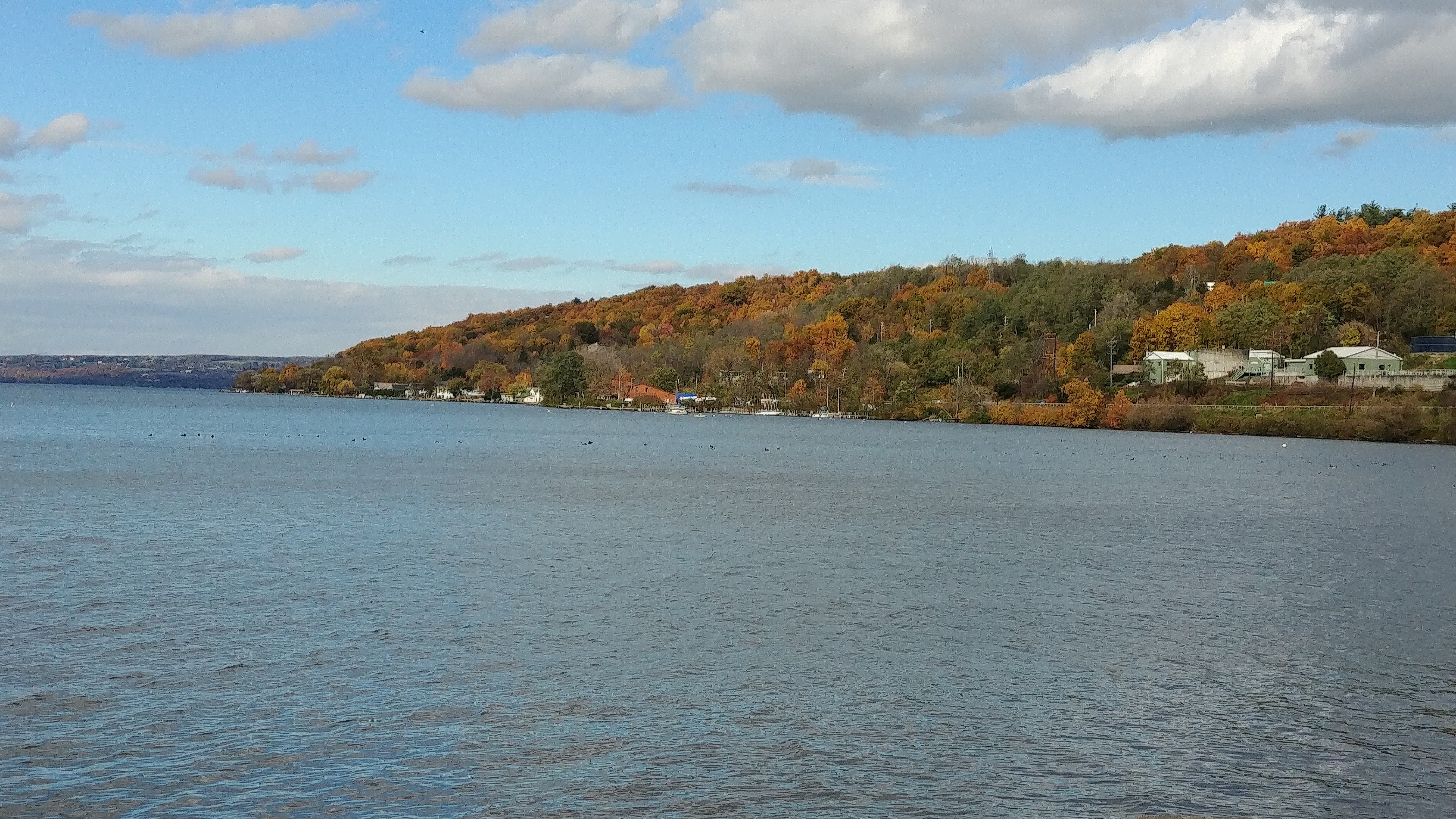
A view of Cayuga Lake. Environmental efforts across Tompkins County help protect this crucial natural resource.

Below is just a small sample of what the report covers. The full, text-only version can be found at tccpi.org/tccpi-2021.html. If you’d like a free PDF copy of the illustrated 37-page report, contact us at info@tccpi.org.

The biggest news of 2021 was the Ithaca Common Council’s vote in November to begin decarbonization of the city’s 6,000 buildings (tinyurl.com/26y8exs5). Under the leadership of Luis Aguirre-Torres, who came on board in March as the city’s sustainability director, the plan secured $105 million in private investment to carry out energy efficiency retrofits and install heat pumps.

The initiative followed the adoption in June of the Ithaca Energy Code Supplement requiring net-zero construction for new buildings by 2026. The city also launched a process to implement all-renewable community choice aggregation for residents and proposed a 25-acre solar array in the southwest area of the city.

Other municipalities took important steps to facilitate the transition to clean energy. Tompkins County developed a Green Facilities Plan (tinyurl.com/ycglol6a) to improve energy efficiency of its buildings, and the Legislature approved a $7 million bond to kick off phase one of the plan.

The Town of Ithaca also adopted the Energy Code Supplement and joined with the city to develop a community choice aggregation program. The towns of Ithaca, Caroline, and Dryden conducted clean heating programs in partnership with HeatSmart Tompkins, resulting in grant funding and numerous heat pump installations.

Dryden adopted the NYS Stretch Code to require higher energy efficiency in new construction and, along with the town of Ithaca, continued to install LED streetlights.

The highlight of 2021 in the transportation sector took place on Earth Day when Tompkins Consolidated Area Transit (TCAT) unveiled its first-ever fleet of electric buses. The Center for Community Transportation (CCT), Cornell Cooperative Extension of Tompkins County (CCE-Tompkins), and Downtown Ithaca Alliance (DIA) carried out key efforts to reduce greenhouse gas emissions.

CCT’s Ithaca Carshare, Bike Walk Tompkins (and its signature program Streets Alive! Ithaca) and Backup Ride Home all continued to play vital roles in promoting alternatives to car ownership and single-occupancy commuting, as did CCE-Tompkins’ Way2Go and DIA’s GO Ithaca.

CTC and CCE-Tompkins also collaborated on identifying and addressing barriers to the wider adoption of electric vehicles (EVs) among underserved populations. In addition, TCAT, Ithaca Carshare, and CCE-Tompkins partnered on several events offering opportunities to see EVs and speak with EV owners. Both Tompkins County and Ithaca Carshare added several EVs to their fleets, and the city explored ways to electrify its fleet and deploy a shared electric bike program.

Recycling, reuse and waste management also saw significant new developments in 2021. Finger Lakes ReUse made perhaps the biggest splash with its opening of the ReUse MegaCenter at Triphammer Marketplace. The new location, with a half-acre of retail space, is now one of the largest reuse business locations in upstate New York.

In all, Finger Lakes ReUse diverted an estimated 1,023 tons of materials through its three locations, including furniture, building materials, housewares, electronics, books, textiles, appliances, and more.

Cornell University has reduced campus waste by one-third in the last five years, and reuse and reclamation doubled in the last year.

Twelve restaurants and eateries on The Commons support Zero Waste Tompkins’ Ithaca Reduces program by asking customers to bring their own containers and cups. Furthermore, downtown Ithaca has about a dozen independent, locally owned stores that specialize in reuse and recycled products.

Education and advocacy were crucial components of the climate protection effort in 2021. Cornell and CCE-Tompkins, in particular, played major parts on the education front. Thanks to the ongoing integration of sustainability into campus learning and research, 100% of Cornell students now graduate with sustainability learning outcomes, beginning with a requirement that all incoming students complete a sustainability assessment and learning module.

Over 40 living laboratory projects take place each year using the campus as an innovation hub for sustainability solutions. Students can major, minor or concentrate in 87 programs focused on sustainability. Nearly all academic departments are currently undertaking sustainability-focused research, including 619 faculty fellows associated with the Cornell Atkinson Center for Sustainability.

These and other achievements earned the university a third consecutive Platinum rating in 2022 from STARS, the international gold standard for assessing campus sustainability work.

At CCE-Tompkins, the Energy and Climate Change team worked with city staff and other key community stakeholders to explore strategies for community education and outreach around the Ithaca Green New Deal (IGND). The city sustainability office and CCE-Tompkins joined with the training program Roots of Success to begin development of a regional workforce training ecosystem.

In addition, CCE-Tompkins staff created resources for CCE educators across the state on large-scale solar development and reducing energy use. Get Your GreenBack, which became part of CCE-Tompkins in late 2021, saw its volunteer Energy Navigator program expand dramatically with a NYSERDA grant to revise its curriculum and take its operation statewide.

The tiny home PowerHouse proved to be a big hit, demonstrating at outreach events and school programs how to reduce energy use and transition to renewable energy. Together with HeatSmart Tompkins and Sustainable Finger Lakes (formerly Sustainable Tompkins), these efforts helped to increase the adoption of home energy retrofits and heat pumps.

PRI/Museum of the Earth, the Sciencenter, New Roots Charter School, the Ithaca 2030 District, TCCPI and the Tompkins County Environmental Management Council carried out other important educational work regarding climate, energy and sustainability in 2021.

Advocacy activities took on an increasing sense of urgency as climate change accelerated in 2021. The local chapters of Citizens Climate Lobby and Climate Reality Project worked to raise awareness about federal legislation such as the carbon dividend bill and the state’s Climate Leadership and Community Protection Act, which in 2019 established aggressive climate targets.

Fossil Free Tompkins (FFT) and HeatSmart Tompkins actively participated in the statewide Renewable Heat Now coalition, which scored important victories in the recent legislative session, including passage of a moratorium on the use of fossil fuel plants for cryptocurrency mining.

FFT and other local environmentalist organizations campaigned to ensure that Greenidge Power Plant did not get its air permit renewed, and these groups also supported the successful purchase by Finger Lakes Land Trust of NYSEG’s Bell Station property. Sunrise Ithaca held events throughout 2021, including a Green Building Policy Town Hall, several climate rallies and a community forum on the implementation of the IGND.

At the heart of all this outstanding work, as always, was the Park Foundation. Without its generous, ongoing financial support and guidance, many if not most of the activities captured in the TCCPI report would not have occurred. The community owes a debt of gratitude to the foundation and its extraordinary record of civic betterment.
 

Building Electrification in the Empire State

New York burns more fossil fuels in its residential and commercial buildings than any other state in the country, a fact that underscores the importance of dramatically reducing the carbon footprint of our built environment to avert runaway climate change. As the New York legislature entered the final days of the 2022 session last week, however, prospects for passage of the All-Electric Building Act (AEBA) appeared dim.

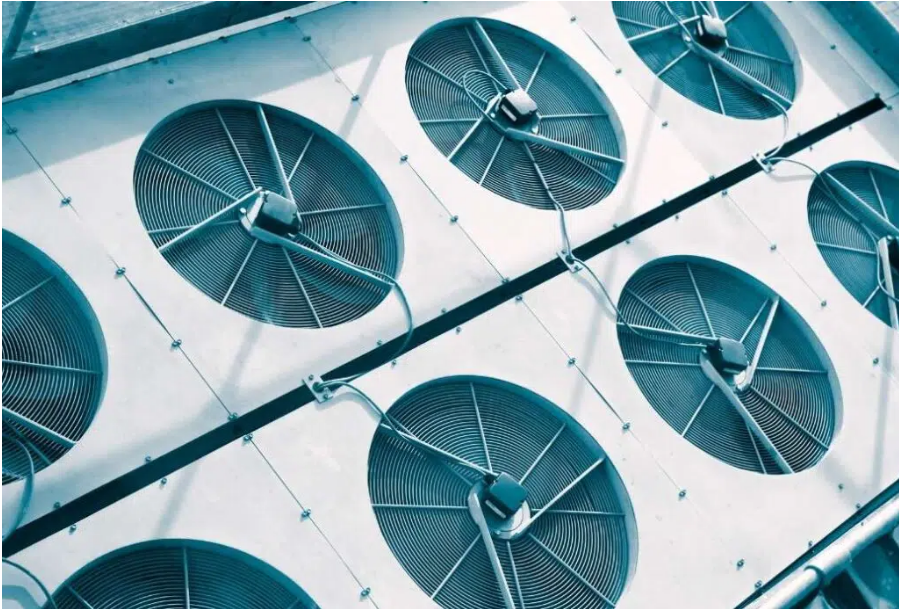
Commercial building heat pumpsThe AEBA would have required all new buildings starting in 2024 to be constructed using only electric appliances for heating, cooking, hot water, and drying clothes; in 2027, the standard would have applied to taller buildings as well.

Although other significant environmental and climate legislation did make it through, including the two-year moratorium on cryptocurrency mining produced by fossil fuel power plants, it was lights out for the AEBA when the session ended. The bill had strong support in both houses, but the leadership blocked it from going to the floor for a vote. It was a bitter disappointment for climate activists, especially in light of the Democratic majority in the state legislature.

Similar proposals have fared better elsewhere in the U.S. Washington became the first state in the country in April to effectively ban the use of natural gas in most newly constructed buildings, mandating the installation of all-electric heating and hot water systems. California adopted a new building code in August 2021 that established a strong preference for electric heating in new construction, although it did not impose an explicit ban on natural gas.

Closer to home, the Ithaca Common Council in May 2021 voted unanimously in support of an energy code supplement that required all new construction beginning in 2026 to be net-zero buildings that do not use fossil fuels except for cooking. New York City passed a law in December 2021 prohibiting the use of natural gas and oil burning systems in new construction starting in 2024, when developers would have to design buildings with all-electric heating, hot water, and cooking appliances.

The AEBA would have implemented a key recommendation of the Climate Action Council, which has been charged with developing a plan to achieve the goals established under the state’s 2019 Climate Leadership and Protection Act (CLCPA). The Draft Scoping Plan, released at the end of December 2021 for public comment, calls for the adoption of all-electric state codes that prohibit the use of fossil fuel for heating, cooling, hot water, cooking, and appliances by 2024 for new construction of single-family and low-rise residential buildings and by 2027 for multifamily buildings over four stories and commercial buildings (see pp. 125-28).Gov. Kathy Hochul’s State of the State address in January seemed to signal a green light for building decarbonization, and she included support for a ban on natural gas in new construction after 2027 in her executive budget, a move backed by the State Senate. The General Assembly, however, left it out of its one-house budget.

The failure of the state legislature to take action on the AEBA makes it very difficult for New York to meet the legal climate targets stipulated in the CLCPA. All the more reason, then, that concerned citizens should make their voices heard in support of the Draft Scoping Plan recommendations. Fortunately, there is still time to do so now that the public comment period has been extended to July 1. Comments may be submitted via the online public comment form, via email at scopingplan@nyserda.ny.gov, and via U.S. mail to Attention: Draft Scoping Plan Comments, NYSERDA, 17 Columbia Circle, Albany, NY 12203-6399. The Climate Action Council will issue a final draft of the climate plan by the end of the year.