Time to Tackle Methane Emissions from Landfills

The following is an expanded and revised version of a piece published in the Ithaca Times in June.

When it comes to fighting climate change, it’s hardly news that time is growing short. What is news, however, is the fact that methane is our best way to buy more time.

A groundbreaking new study using aircraft-based emissions monitoring equipment just confirmed that landfills are the largest source of methane in New York State. Researchers flew over more than 100 waste sites, power plants, and farms, measuring real-time emissions. What they found was staggering: landfills were emitting methane at levels dramatically higher than state and federal estimates.

Methane Emissions Need to be Cut

A garbage scow at Fresh Kills Land Fill on Staten Island. Photo by R36 Coach licensed under CC BY 2.0.

In fact, Seneca Meadows, the biggest emitter of any landfill in the state, was more than four times higher than previously reported.

So what’s the big deal? It’s this: methane is over 80 times more potent than carbon dioxide over a 20-year period. So cutting it is one of the fastest ways to slow global warming.

Makes sense, right? But, frustratingly enough, New York is dragging its heels, continuing to delay action on this vital issue.

Time to Put Rules in Place

Despite passing the Climate Leadership and Community Protection Act in 2019, our state still lacks enforceable methane rules for landfills. That’s unacceptable; more than enough time has occurred to put such rules in place.

The Department of Environmental Conservation (DEC) itself identified this problem in the 2023 Solid Waste Management Plan, which committed to minimizing landfill greenhouse gas emissions through updating regulations and deploying effective monitoring technology. Yet more than two years later, no rulemaking has begun. Further delay hampers New York State’s ability to meet the goals set out in the state’s Climate Law and is a missed opportunity to protect overburdened communities.

Methane by itself is bad enough, but we know methane doesn’t travel alone. It comes with toxic co-pollutants like benzene and other volatile organic compounds (VOCs) that contribute to poor air quality and respiratory illness, especially for the low-income and Black and brown communities disproportionately living near landfills.

States like California and Colorado are already implementing strong landfill methane regulations. This spring, California launched a first-in-the-nation satellite program to track large methane leaks, and Colorado just released what could become the country’s most effective landfill methane standard. The proposed rule, if enacted, would require Colorado landfills to manage their emissions by installing a gas collection and control system. In addition, they would also have to phase out open flares (systems that burn methane gas into the open air) and instead use enclosed systems that more effectively control pollution.

The benefits of taking action are too great to be ignored. Strong rules would deliver significant public health, climate, and economic gains. By contrast, the price of inaction is steep—rising health care costs and worsening climate impacts that New Yorkers cannot afford. New York must get on board with these critical efforts to fight for climate and environmental justice. The Department of Environmental Conservation must initiate rulemaking now. The need for action has never been clearer.
The Days of Reckoning Are Just Ahead

There’s no need at this stage to press the point that the coming U.S. election will be pivotal, not just in terms of whether our constitutional republic will survive, but also whether we can manage to avoid catastrophic, runaway climate change. Regular readers of this column readily grasp what’s at stake with both of these issues.

A report just released by World Weather Attribution (WWA), an international research group, closely examines how the 10 deadliest weather disasters since 2004, including three tropical cyclones, four heatwaves, two floods and a drought, killed an estimated half million people, and probably many more. It makes for sobering reading and, on the eve of Tuesday’s election, is a reminder that our choices at the ballot box will affect not just this nation but the entire planet.

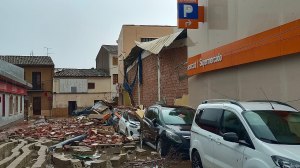
Flooding in Valencia, Spain. Photo by Eidursson – Own Work licensed under CC BY 4.0.

Role of Fossil Fuels
The WWA study investigates how all of these events were intensified by global warming, which was, in turn, caused by the burning of fossil fuels and deforestation. The main finding is simply put: “with every ton of coal, oil and gas burned, all heatwaves get hotter, and the overwhelming majority of heavy rainfall events, droughts, and tropical cyclones get more intense.” In other words, there is no such thing as a “natural” disaster anymore.

Polluters Must Pay
As if to underscore the truth of this observation, horrific flooding in Spain that claimed at least 158 deaths took place just as the WWA analysis was issued. According to Spain’s national weather service, it rained more in eight hours in Valencia, the hardest hit region, than it had in the preceding 20 months. Imperial College climate scientist Friederike Otto, who helps run the WWA, said it was “very clear that climate change did play a role.”

The flooding in Europe and across the U.S. Southeast this fall also underscores why the effort to hold the fossil fuel industry responsible for the havoc that it has caused is so critical, especially in light of the overwhelming evidence that Big Oil was aware of the potential consequences.

At the federal level, Sen. Chris Van Hollen (D-MD), Rep. Jerry Nadler (D-NY), and Rep. Judy Chu (D-CA) have recently introduced bills in Congress to do so. The Polluters Pay Climate Fund Act would assess companies based on their global carbon dioxide emissions, and it authorizes the U.S. Treasury Department to charge the largest polluters in proportion to their past carbon emissions, in excess of 1 billion metric tons, an estimated $100 billion each for ten years.

Closer to home, the New York Climate Change Superfund Act, still sits on Gov. Kathy Hochul’s desk, awaiting her signature to become state law. Both the General Assembly and State Senate passed the legislation during the last session. Public pressure has mounted on the governor to act, and it’s a certainty that this pressure will increase exponentially after the election.

Under the bill passed by lawmakers, New York would seek to collect about $3 billion a year for the next 25 years, for a total of $75 billion. The state Department of Environmental Conservation would be tasked with identifying the oil and gas companies that should be held responsible for greenhouse gas emissions and it would investigate how much they should each pay the state.

Regardless of the outcome of these events, one thing is for sure: the days of reckoning are upon us, and we each have the obligation as democratic citizens to make our voices heard. If there ever was a time to make sure that we become subjects in history and are not just objects of history, it is now.

From Climate Crisis to Climate Chaos

It’s been a record-shattering summer, and from the looks of it, we’re well on our way from climate crisis to climate chaos. Historic heat waves, wildfires, and floods have struck the U.S., Canada, Europe, China, and India, among other places. No doubt the return of El Niño has temporarily exacerbated the frequency and intensity of recent extreme weather events, but climate scientists are clear that the major factor at work is the continued burning of fossil fuels.

The world has not yet passed a tipping point into runaway climate change, say these scientists, but we’re getting closer. They warn that, as unnerving as this summer has been, even worse impacts are sure to come if we don’t move fast to reduce greenhouse gas emissions. “Climate science’s projections [have been] pretty robust over the last decades,” notes Professor Malte Meinshausen of the University of Melbourne in Australia in a Guardian interview from earlier this week. “Unfortunately, humanity’s stubbornness to spew out ever-higher amounts of greenhouse gases has also been pretty robust.


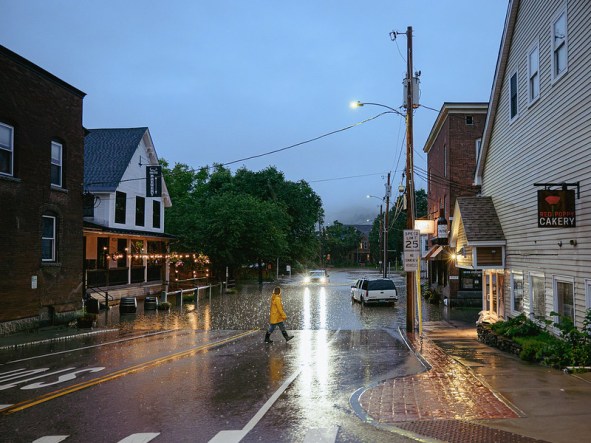
Flooding in Vermont, July 2023. Photo by Nicolas Erwin licensed under CC BY-NC-ND 2.0.

Hottest July Ever

The National Oceanic and Atmospheric Administration (NOAA) announced this month that July 2023 was the warmest July in its 174 years of recordkeeping, and the global surface temperature of the January-July period ranked as the third warmest ever. For the fourth consecutive month, global ocean surface temperatures hit a record high.

“The era of global warming has ended; the era of global boiling has arrived,” UN Secretary-General António Guterres declared last month. “Leaders must lead. No more hesitancy. No more excuses. No more waiting for others to move first. There is simply no more time for that.”

Climate Inequality

The disproportionate impact of climate destabilization has never been more evident. A report on climate inequality released by the World Inequality Lab (WIL) earlier this year found that the top 10% of the world’s carbon emitters were responsible for almost 50% of global greenhouse gas emissions, and the top 1% of global emitters generate more emissions than the entire bottom half. Agricultural productivity has declined by 30% in many low-income regions due to climate change, thus making poverty and food insecurity even worse.

The IPCC Sixth Assessment synthesis report issued in March concluded that climate change impacts are already more far-reaching and extreme than anticipated. Global warming of 1.1°C (1.98°F) has already set off unprecedented changes to Earth’s climate, and 3.3 billion to 3.6 billion people currently live in countries highly vulnerable to climate impacts. According to the report, the death toll from extreme weather disasters is 15 times as high in vulnerable nations as it is elsewhere.

A window still exists to avoid the worst impacts of climate change, the report points out, but it is a narrow one. To limit global warming to 1.5°C (2.7°F), greenhouse gas emissions need to peak before 2025 at the very latest, get cut in half by 2030, and reach net zero by 2050. The global consumption of coal must fall 95% by 2050, oil use must decline by 60%, and gas by about 45%. The annual investment in clean energy investment worldwide needs to increase between 3 and 6 times by 2030.

Fossil Fuel Subsidies

It’s in the context of these findings from NOAA, WIL, and the IPCC that an analysis of global fossil fuel subsidies from the International Monetary Fund (IMF) strikes with special force. Total subsidies for oil, gas, and coal in 2022 surged to a record $7 trillion (a rise of $2 trillion over two years), costing the equivalent of 7.1% of global gross domestic product.

As the IMF observes, that’s more than governments spend annually on education (4.3% of global income) and about two thirds of what they spend on healthcare (10.9%). Another way of putting these hard-to-swallow facts is that fossil fuels were subsidized in 2022 at the rate of $13 million a minute. The biggest subsidizers of fossil fuels were China, the U.S., Russia, the European Union, and India. The G20 nations cause 80% of global carbon emissions, yet they spent a record $1.4 trillion on fossil fuel subsidies in 2022.

The cognitive dissonance generated by the juxtaposition of recent extreme weather events, on the one hand, and the enormous undercharging of fossil fuel costs and their environmental impacts, on the other, could hardly be more head splitting. In the words of the IMF, scrapping fossil fuel subsidies “would prevent 1.6 million premature deaths annually, raise government revenues by $4.4 trillion, and put emissions on track toward reaching global warming targets.” To put it bluntly, ending these subsidies must be at the center of any effective climate solution.

The Climate Action Council Delivers

The Climate Action Council, in a momentous step on December 19, approved the state’s Final Climate Scoping Plan in a 19-3 vote. This plan provides a detailed guide to reaching the ambitious climate goals delineated in the 2019 Climate Leadership and Community Protection Act, including 70% renewable energy by 2030 and 100% zero emission electricity by 2040. The ramifications are far reaching: New York must retire fossil fuel plants and stop burning fossil fuels like gas in buildings. This critical milestone represents the culmination of over three years of collaboration and over a hundred meetings, and includes contributions from the Council’s Advisory Panels and Working Groups. The release of the Draft Scoping Plan exactly one year ago led to a public comment period that included 11 public hearings across the state and more than 35,000 written comments.
Meeting of NYS Climate Action Council

The first meeting of the Climate Action Council took place in March 2020. Photo credit: NYSERDA.

The scoping plan establishes a comprehensive foundation for dramatically lowering greenhouse gas emissions, electrifying buildings and transportation systems, securing climate justice, and advancing New York’s commitment to economy-wide carbon neutrality by 2050. It outlines changes in state policy that, if implemented, will not only move New York away from fossil fuels but also towards a just energy transition, one that will finally address the harm that pollution from conventional energy systems have inflicted on frontline communities. It identifies strategies to reduce the environmental burden of greenhouse gas emissions and associated pollutants suffered by these communities as well as address energy affordability. The scoping plan makes clear that the benefits of the clean energy transition must not overlook workers and communities that have relied on the fossil fuel economy for their livelihood, and emphasizes that they should not be left behind. At the heart of the scoping plan is a determination to make sure that the advancement of a clean energy economy results in new economic development opportunities throughout the state and supports long-term, well-paying jobs. At the same time, the plan offers recommendations regarding how to provide support and tools to workers and communities affected by the energy transition. What happens if the plan is not implemented? The state estimates that the cost of inaction will exceed the cost of action by more than $115 billion. That’s a big price tag for failing to stave off runaway climate change and ignoring environmental justice and health concerns. Make no mistake, the plan is not perfect. The final draft postpones the dates by which New York will move away from fossil fuel use for construction of new homes and commercial buildings, putting them off one year later than in the draft plan passed in December 2021. To take just one example, the prohibition of fossil fuels in new construction for single family homes will occur in 2025, not 2024. As Cornell Professor Robert Howarth, a member of the Climate Action Council, points out, this delay is especially disappointing given that the building sector is the largest source of greenhouse gas emissions. Another area inviting scrutiny involves “renewable natural gas” and hydrogen for use in gas pipelines, a ploy by the fossil gas industry to extend its operation and profits into the future. Raya Salter, founder and executive director of the Energy Justice Law and Policy Center and member of the Climate Action Council, rightly terms these so-called alternative fuels “a dangerous distraction.” In her words, “there is at best a limited role for alternative fuels, which are in many cases infeasible, costly, untested, leak-prone and carbon intensive to produce.” Despite these flaws, the scoping plan marks a crucial turning point in New York’s energy transition and establishes an important framework for moving forward. Next steps include presentation of the plan to the governor and state legislature, and the creation of new rules and regulations to take into account its recommended policy changes. As this process unfolds, we should all work to ensure that the scoping plan is funded and fully implemented to ensure a just transition for all New Yorkers.

COP26, Youth, and the Failure of Governments

As international leaders gather in Glasgow, Scotland for the COP26 climate summit, which U.S. climate envoy John Kerry calls “the last best hope for the world to get its act together,” perhaps the most important thing they can keep in mind is a landmark study issued in September that underscores the deep anxiety, distress, and anger that young people are experiencing about climate change and government inaction to deal with it. 

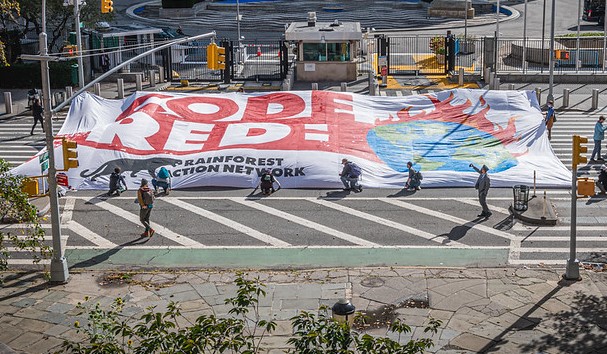
In New York City, ahead of COP26, activists unfurled a giant banner in front of the United Nations headquarters. Photo by Rainforest Action Network licensed under CC BY-NC 2.0.

The survey—the largest global investigation of its kind—asked 1,000 16- to 25-year-olds in each of ten countries how they felt about the climate crisis and government responses to it. The results found that 59% of respondents said they felt “very worried” or “extremely worried” about climate change and over 45% of them said their feelings about climate change negatively affected their daily lives. Thirty-nine percent indicated they were “hesitant to have children.” Underlying the distress of young people was the perception, in the words of the report, “that they have no future, that humanity is doomed, that governments are failing to respond adequately, and with feelings of betrayal and abandonment by governments and adults.

Caroline Hickman, a researcher in climate psychology at the University of Bath and one of the authors, acknowledged in an NPR interview ​that they were aware children and young people around the world were upset about climate change. “What we didn’t realize was quite how frightened they were,” she said. “We didn’t realize the depth of the feeling. And we didn’t realize how that was impacting on their thinking and their daily functioning.”

The sad fact is that young people have substantial cause to be worried. Greenhouse gas emissions reached a new record high last year and a U.N. emissions gap analysis—what U.N. secretary general Antonio Guterres called a “thundering wake-up call”—released just before the opening of COP26 demonstrated that commitments made under the Paris Agreement will fail to keep the global warming under 1.5C this century. Indeed, it concluded that the world was on track to heat up about 2.7C, which would have disastrous consequences. Another U.N. report found that fossil fuel production planned by the world’s governments “vastly exceeds” the limit needed to keep the rise in global temperature to 1.5C.

As might be expected, the survey of young people revealed some variation from country to country. The largest proportion of respondents who felt “very worried” or “extremely worried” lived in countries extremely vulnerable to climate destabilization: the Philippines (84%), India (68%) and Brazil (67%). But even young people from the wealthier nations included in the survey (Australia, Finland, France, Portugal, the U.K., and the U.S.) expressed a great deal of concern. Sixty-five percent of young Portuguese, for example, indicated high degrees of climate anxiety.

Especially troubling is the revelation that an overwhelming majority of those surveyed believed their governments were not telling them the truth about the effectiveness of the measures they were undertaking on climate change. A news report in Nature succinctly summarized the findings: “65% of respondents agreed with the statement that governments are failing young people, 64% agreed that they are lying about the impact of actions taken, and 60% agreed they were dismissing people’s distress. Only 36% agreed that governments are acting according to science.”

Pause for a moment to consider the meaning of these data: most young people in the world believe that their governments are deceiving them about the most critical issue of our time, an unprecedented crisis that threatens the very future of human civilization. Don’t be surprised if a lot of these youth show up in Glasgow to express their frustration and anger about this situation. In fact, let’s hope they do. It may be the only way to finally get politicians and policymakers to pay attention and take the steps necessary to head off runaway climate chaos.

Buckling Roads Ahead

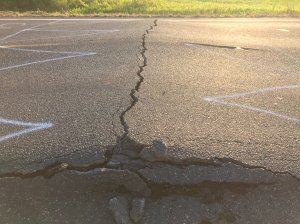
A historic heat wave has the Pacific Northwest caught in its grip. One of the few places that many believed would largely escape the worst of climate change has seen temperatures reach triple digits this past weekend. Portland, Oregon, hit 112 degrees Fahrenheit on Sunday, breaking the all-time high of 108 degrees Fahrenheit, which had been set just the day before. Seattle, for the first time since records started being kept in 1897, experienced two consecutive triple-digit days. Despite the Northwest’s reputation for moderate weather, it’s so hot that roads are buckling, even the interstate highways.

One of the roads in Washington State buckling in the recent historic heat wave. Twitter: @wspd7pio.

Other areas of the West face even worse conditions. “The Southwest is getting hammered by climate change harder than almost any other part of the country, apart from perhaps coastal cities,” points out Jonathan Overpeck, a climate scientist at the University of Michigan. “And as bad as it might seem today, this is about as good as it’s going to get if we don’t get global warming under control.”

According to a hair-raising report by the UN’s Intergovernmental Panel on Climate Change (IPCC), a draft of which was obtained recently by Agence France-Presse (AFP), the outlook is unrelievedly grim if we don’t change direction immediately. Pulling no punches, the report bluntly declares that “the worst is yet to come.”

Entire societies and ecosystems will begin to come apart under the stress. “Species extinction, more widespread disease, unlivable heat, ecosystem collapse, cities menaced by rising seas – these and other devastating climate impacts are accelerating and bound to become painfully obvious before a child born today turns 30,” according to the AFP account.

The 4000-page IPCC draft report, not scheduled for release until February 2022, constitutes the most comprehensive assessment so far of how climate change is disrupting our world. As have numerous other studies, the IPCC analysis makes clear that those least responsible for climate destabilization are suffering disproportionately. In particular, indigenous communities struggle to preserve their cultural practices, traditions, and livelihoods in the face of rapid global warming that they did little to set off.

Perhaps the most urgent point made in the IPCC report is that current levels of adaptation are not nearly sufficient to meet the moment. Even under an optimistic scenario of two degrees Celsius of warming by mid-century, the projections are startling. Billions of people will endure coastal destruction, drought, famine, wildfire, and extreme poverty.

The IPCC emphasizes that the foreboding picture it paints doesn’t relieve us of the obligation to do everything we can to keep the situation from completely unraveling. It notes that there are still significant steps we can take to mitigate the worst consequences of climate change. But, as the AFP dispatch puts it, “simply swapping a gas guzzler for a Tesla or planting billions of trees to offset business-as-usual isn’t going to cut it.”

“We need transformational change operating on processes and behaviours at all levels: individual, communities, business, institutions and governments,” insists the IPCC report. “We must redefine our way of life and consumption.”

The question, of course, is whether we can pull off this kind of sweeping makeover. What will it take to convince people and their governments that this is the only viable way forward? The answer remains to be seen but, like the ghost of Hamlet’s father, the question hangs over us, warning of a dire end if we fail to pay attention.

Pointing to past major climate shocks, the IPCC report observes that they upended the environment and wiped out the vast majority of species. “Life on Earth can recover from a drastic climate shift by evolving into new species and creating new ecosystems,” it cautions. “Humans cannot.”

P.S. It hit 116 Degrees Fahrenheit in Portland, OR yesterday. Three days, three records in a row. Oh, and it was another triple-digit day in Seattle. So that’s the first time that we know of that Seattle had three triple-digit days in a row.

Climate Change is a Public Health Crisis

As 2020 mercifully comes to a close, the Covid-19 pandemic continues to rage out of control, with nearly 20 million cases and over 344,000 deaths in the U.S. alone since the beginning of the year. According to the New York Times, at least 3,800 Americans died yesterday from the coronavirus. Certainly, the development of several effective vaccines in record time is a bright spot in an otherwise dismal picture, but even there logistical challenges have led to a much slower roll out than originally projected.

Given these horrific circumstances, we are understandably preoccupied with this historic outbreak, but it shouldn’t blind us to the other looming public health threat: the climate emergency. The Lancet, one of the world’s preeminent research medical journals, published a comprehensive study earlier this month focusing on public health data from 2019, warning that heat waves, air pollution, and extreme weather events are inflicting increasing damage on human health. In particular, the links between death, disease, and burning fossil fuels couldn’t be clearer.

“Many carbon-intensive practices and policies lead to poor air quality, poor food quality, and poor housing quality, which disproportionately harm the health of disadvantaged populations,” wrote the dozens of physicians and public health experts from around the world who authored the report.

Among the deadliest effects of global warming are the longer, more intense heat waves now taking place across the planet. As with coronavirus, older people are most at risk. In the past 20 years, the number of people over 65 who have died as a result of extreme heat has increased more than 50 percent. At least 296,000 people died from the heat in 2018, the most recent year for which global data are available, and almost 20,000 older Americans died from heat waves last year.

Furthermore, the Lancet report notes that climate change is a threat to critical public health resources such as hospitals, primary care facilities, and emergency services. Two thirds of the more than 800 cities contacted by researchers said they expect climate change to “seriously compromise public health infrastructure.” With this infrastructure already near the breaking point due to the pandemic, we are obviously in a perilous situation. If nothing else, the past year has underscored how ill-equipped the public health system is to manage major, long-running disasters, even in developed nations such as the U.S., Britain, and Italy.

In another investigation released this month, the Johns Hopkins Bloomberg School of Public Health and Trust for America’s Health conclude that most U.S. states aren’t properly prepared to protect their residents’ health from climate change. Perhaps of deepest concern is the study’s observation that some of the states most vulnerable to climate-related health harms are the least prepared to handle them. Even the states best prepared to deal with these threats, such as Utah, Maryland, Vermont, Virginia, and Colorado, still have plenty of work to do.

The analysis identified three areas of public health readiness that require the most attention:
  • Prehospital care provided by emergency medical services.
  • Mental and behavioral healthcare, including access to social service networks and substance abuse treatment.
  • Social capital and cohesion, the degree to which residents are connected to one another and to local organizations and governments.

Again, the current pandemic has exposed an alarming degree of weakness in all three areas, so these findings should come as little surprise. As the NRDC contends in its summary, given the recent rate of climate change, “we need more progress at the state level—and fast.”

What can we do? Among the report’s recommendations are:
  • More effective federal leadership in developing a national climate and health strategy.
  • Investing in research, training, and public health infrastructure at the state and federal levels.
  • Addressing racial, socioeconomic, and other health inequities that are the root of many climate vulnerabilities.
  • Ensuring community members have a leading role in planning so that those most at risk are at the table.

All of the above suggests that strengthening the public health system should be the top priority for 2021. As we move forward to repair this system, we should keep in mind how the interrelated dynamics of economic inequality, racial injustice, and a broken social contract have all contributed to the deep hole in which we find ourselves at the start of a new year. Only if we do so will we make lasting progress.

Reflections on the Life of Kirby Edmonds

Many members of the Ithaca community have worked hard to bring the environmental and social justice movements together in common cause. They understand the crucial need, as I wrote recently, “to break out of our silos and build a broad-based, multiracial coalition to fight for both climate and racial justice.”

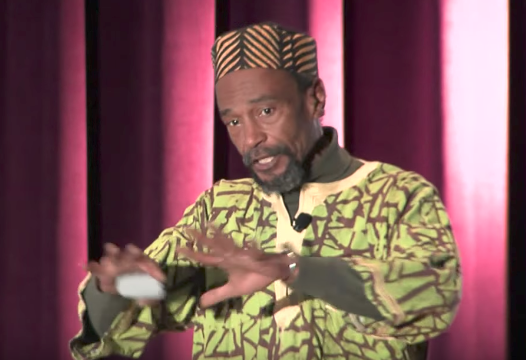
No one grasped this necessity and worked harder and more effectively to accomplish this difficult task than Kirby Edmonds, who passed away on August 22 from complications of a heart attack he suffered in July. None of us who worked with Kirby — and there were a lot — doubted that he would recover and rejoin us at the table (in the form of Zoom most recently) to help us carry on. His sudden death came as a tremendous shock and left a huge hole in the soul of our community.

Among his many leadership roles, Kirby was Managing Partner of TFC Associates (Training for Change), Senior Fellow and Program Coordinator of the Dorothy Cotton Institute, and Coordinator  of the Cradle to Career collective impact initiative. Most recently, he had helped to organize the Tompkins County COVID-19 Food Task Force, established to ensure that those in need have access to food and that food producers stay in operation during the pandemic.

Kirby spearheaded the effort in 2011 to launch the Building Bridges Initiative, whose goal is to create a “socially just and ecologically sound local economy” in the Tompkins County area. The Tompkins County Climate Protection Initiative (TCCPI) joined with many other organizations and coalitions to be part of this effort, and Kirby met most recently in June with the TCCPI members, along with longtime community activist Anne Rhodes, to discuss the current status of the Ithaca Green New Deal, in which he also played a key role.

Kirby knew in his bones that the old notion of top-down, command-and-control leadership was no longer effective or desirable in a world facing complex, interrelated, and seemingly intractable problems. In his profoundly calm and wise fashion he modeled a new way of exercising leadership, one in which a leader created the space to build a network of relationships, inviting people from all parts of the system to participate and contribute to the process of developing solutions.

“If we really want to solve these problems, then we’ve got to find new structures to work on them,” Kirby said in a 2017 interview. As Irene Weiser, coordinator of Fossil Free Tompkins, observed upon news of his death, Kirby “brought us Building Bridges. In so many ways, Kirby was that bridge.” Connect and collaborate were his watchwords.

Dismantling structural racism and poverty, establishing food security, affordable housing, and good paying jobs, and ensuring that our environment and climate could support the generations that come after us: these were the driving forces in Kirby’s all-too-short life. Equity, justice, inclusion, stewardship, and wisdom: these are the values that animated his actions.

Kirby was our very own John Lewis, who once declared, “We do not live on this planet alone. It is not ours to hoard, waste, or abuse. It is our responsibility to leave this world a little more clean and a little more peaceful for all who must inhabit it for generations to come.” As did Lewis, Kirby left us a vision and blueprint for building a better, more just world; now we must bring about the fulfillment of that vision and blueprint, keeping Kirby close to our hearts and never forgetting what he stood for as we do so.

Racial Justice and Climate Change

We are currently in the grips of a constellation of crises: the Covid-19 pandemic, the struggle to confront systemic racism, and the ongoing climate emergency. The three do not operate independently of each other, but rather are closely linked, even intertwined. How we address them and their interconnections will determine the future of our nation and the world. “You can’t build a just and equitable society on a planet that’s been destabilized by human activities,” writes Sarah Kaplan. “Nor can you stop the world from warming without the experience and the expertise of those most affected by it.”

The climate emergency, the pandemic and its racially disproportionate impact, and the killing of George Floyd and other shocking instances of police violence have ruthlessly exposed the longstanding racial injustice that forms the core of the American experience. “Whether it is a global pandemic, climate change, or police brutality, people of color — particularly black communities — are always the first and worst hit, and it must end,” Alvaro S. Sanchez, the Environmental Equity Director at The Greenlining Institute in Oakland, rightly insists.

Fighting climate change and Covid-19, in short, means we have to fight racial injustice. As activist  Elizabeth Yeampierre contends, “you can’t treat one part of the problem without the other, because it’s so systemic.”

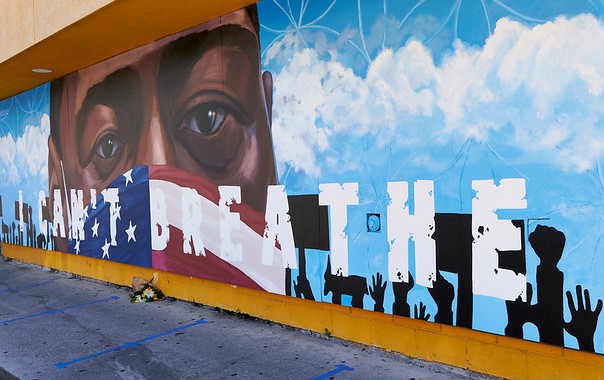
A George Floyd mural in Houston. Photo by Alfred J Fortier licensed under CC BY-NC 2.0.

The evidence is overwhelming that communities of color are the most threatened by Covid-19. The latest data from the Centers for Disease Control and Prevention, made available as the result of a New York Times law suit, shows that Latinos and African Americans  have been three times as likely to become infected as their white neighbors. Furthermore, African Americans and Latinos have been nearly twice as likely to die from the virus as white people.

When it comes to exposure to pollution, the data is not any better. “Sixty-eight per cent of black people live within thirty miles of a coal-fired power plant,” notes  Rev. Lennox Yearwood, Jr. in a recent interview with Bill McKibben. “We know that the destruction of Hurricane Maria, Harvey, Katrina, and Superstorm Sandy all had a direct impact not only on marginalized and vulnerable communities but on communities of color, which reinforces that racial justice and climate justice are linked.” Yeampierre points specifically to the prevalence of asthma and upper respiratory disease in black communities. In her words, “we’ve been fighting for the right to breathe for generations.”

Just how bad are the disparities? Researchers from the University of Minnesota and the University of Washington last year compared Americans’ exposure to fine particulates to how much pollution their consumption generates. They found that whites experience 17% less exposure to pollution, on average, than their own consumption causes. In stark contrast, African Americans are exposed to 56% more pollution than their consumption generates, and Latinos experience 63% more. It would be hard to find a more striking illustration of white privilege.

White environmentalists often jump to the conclusion that communities of color are too caught up in their day-to-day struggle for survival to care about climate change. But, in fact, climate change is not an abstract concept to black and brown people; they are faced with the consequences of climate instability on a near daily basis. As a result, these under-served communities represent what one analyst calls “a well of support for broader action.” In fact, a poll conducted a year ago by the Yale Program on Climate Change Communication found that 49% of white respondents expressed “alarm” or “concern” about global warming. The figures for Latino and African-American respondents were 69% and 57%, respectively.

The unmistakable message of our time is that we have to break out of our silos and build a broad-based, multiracial coalition to fight for both climate and racial justice. We must end the practice of making some communities sacrifice zones, understanding that in the end we all pay a price for this short-sighted approach. Instead, we must build a clean energy economy that benefits all and strengthens the resilience of local communities.


Coronavirus and the Climate Crisis

The sudden appearance and rapid spread of the coronavirus is an unsettling reminder of how chaotic and uncertain the world can be. Seemingly out of the blue, this new and deadly virus is upending life across the globe — the latest reports identify almost 50 countries that have confirmed cases of infection.

In China, the epicenter of the outbreak, manufacturing, construction, and other economic activities have dramatically slowed down and even come to a halt, while air travel in the country has decreased by 70 percent. As a result, China’s carbon dioxide emissions over the past three weeks have declined by 25 percent.

A significant majority of American voters now support the Green New Deal.

It’s hard to escape the feeling that a similar unraveling of daily life is what the climate emergency has in store for us. The sense of foreboding is palpable. The fragility of modern life, its dependence on complex webs of supply chains, intricate social systems, infrastructure, and technology: all of it is up for grabs as we confront an epic series of disasters.

“Not all that long ago,” David Wallace-Wells observed this week, “climate change was a story unfolding only in the future tense.” Now, though, it has come “roaring into the present with a terrifying fury.” The incineration of one quarter of Australia’s forests in a single fire season underscores his point.

The ravages of climate destabilization, of course, are not confined to environmental destruction. Rising sea levels, extended droughts, flash floods, and wild fires are perhaps its most obvious manifestations. But less visible developments such as malaria, malnutrition, and heat stress will just as surely cause death and misery for millions of people as the climate crisis accelerates. If only global warming could inspire the kind of collective action that our fear of epidemics does.

More than ever, we need to remember that our fates as individuals and nations are intertwined. The poorest countries, as well as the most marginalized communities in the developed world, will continue to find themselves exposed disproportionately to the havoc that is underway. Just as doctors and nurses are rushing forward into the fray to care for patients struck down by COVID-19, the more fortunate among us need to act with a keen awareness that we are all in this together. It’s not just a question of morality; the survival of human civilization depends on it. In the words of Dr. Martin Luther King, Jr., “We are caught in an inescapable network of mutuality, tied in a single garment of destiny.”