This past July was the warmest July in the 175 years that the National Oceanic and Atmospheric Agency (NOAA) has been keeping records. It was also the 14th consecutive month of record-high global temperatures, which itself is a record.

Commercial heat pumps in NYC.
We’ve jumped from 11 billion tons of carbon dioxide per year in 1960s to 36.6 billion tons in 2023. The world is now in territory not seen for more than 3 million years. At that time the global surface temperature was 4.5-7.2°F warmer than during pre-industrial era. Human civilization simply cannot survive in a climate like this.
We’re clearly walking along a knife’s edge. That’s what makes the complacency — some might say willful opposition — of the utilities so infuriating.
This is not to say utility efforts to help customers make energy-saving improvements haven’t made a difference, because they have. But it clearly hasn’t been enough. Utilities could do far more to help homes and businesses decarbonize.
We recently saw a good example in the NYS commercial building sector of what can happen when a utility makes a serious effort to facilitate electrification. NYSEG launched an economic development heat pump incentive for gas-constrained areas in April 2023 as part of a larger statewide effort rolled out by the NYS Public Service Commission. The pilot program provided up to $200,000 per project to transition off gas-powered technologies. Together with federal incentives, it suddenly made sense financially to install heat pumps in nonresidential buildings in Ithaca.
In short order, ten major weatherization and electrification projects involving commercial buildings got underway. Retail stores, restaurants, offices, and houses of worship, as well as cultural and performance spaces, took advantage of the decarbonization program, amounting to a total clean energy investment of over $1.9 million, with $1.4 million from state and federal incentives. The energy upgrades represent nearly 680 metric tons of annual avoided greenhouse gas emissions based on EPA estimates. Five of the ten buildings were members of the Ithaca 2030 District.
The program expired after only several months and once again the effort to electrify commercial buildings didn’t pencil out. Not surprisingly, the stream of projects slowed to a trickle.
A new report from the American Council for an Energy Efficient Economy (ACEEE) takes a close look at utility energy-saving initiatives, arguing that utilities need to step up their efforts. The report provides recommendations for state legislators and utility regulators aimed at expanding the scale and scope of utility energy efficiency programs to better address the growing climate crisis.
In particular, the study makes the crucial point that “climate goals, not just energy savings, should drive utilities’ efficiency efforts.” It notes that the majority of current energy efficiency programs focus too narrowly on energy savings and, as a result, often miss important decarbonization opportunities. Without a doubt, state regulators and utitlity executives should rethink their approach to energy efficiency; this report offers a new path forward.
 The
The  The
The 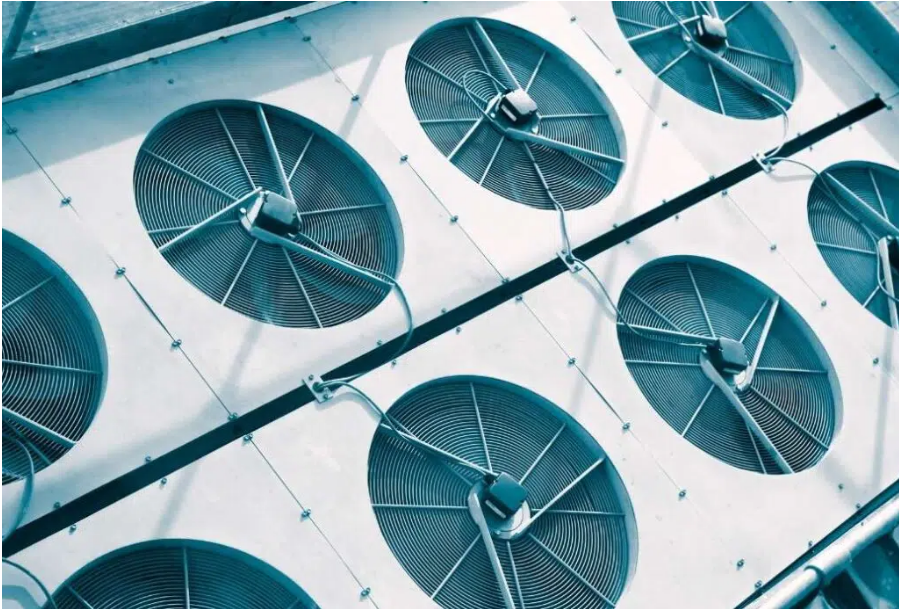 The AEBA would have required all new buildings starting in 2024 to be constructed using only electric appliances for heating, cooking, hot water, and drying clothes; in 2027, the standard would have applied to taller buildings as well.

 Rebooting the Future