TCCPI at Fifteen

It’s hard to believe, but this summer marks the 15th anniversary of the Tompkins County Climate Protection Initiative. At the time of TCCPI’s launch in June 2008 I was working on a book with a colleague at Second Nature, a nonprofit think tank in Boston dedicated to promoting the higher education sustainability movement. One of the key themes in the book, Boldly Sustainable: Hope and Opportunity for Higher Education in the Age of Climate Change (2009) was the need for greater collaboration between colleges and universities and the communities in which they operated.

I was drafting a chapter for the book in early 2008 on sustainability, economic development, and community partnerships, exploring several case studies across the U.S., including Ithaca. I had stepped down the previous year from the provost’s office at Ithaca College, where I had helped lead what became a nationally recognized sustainability initiative, to join Second Nature as a senior fellow. Having left the academic world following a quarter century as a faculty member and administrator, I became much more aware of the disconnect between campuses and communities in the emerging sustainability movement. 

Time for Collaboration

Looking over the Ithaca landscape, it seemed to me that the time was right for an effort that would bring together higher education institutions, local governments, nonprofits, and businesses around the need for climate action and the energy transition. I brought the idea to the Park Foundation and submitted a grant proposal for what became TCCPI; the foundation generously funded the proposal and has continued to do so with unstinting support.

In that time, TCCPI has held about 165 monthly meetings, published 76 newsletters, and issued 14 annual reports of member accomplishments regarding climate action, clean energy, and sustainability. In 2016, as part of an effort to strengthen our engagement with the private sector, we established (with the assistance of a grant from NYSERDA) the Ithaca 2030 District, part of what is now a network of 24 urban districts in the U.S. and Canada dedicated to improving the energy and water performance of commercial buildings in downtown areas. 

From an initial base of 15 buildings, the Ithaca 2030 District has grown to 44 buildings with 584,381 square feet of committed space. Besides our quarterly meetings and newsletters, we provide each property member with an interactive, online dashboard that measures the energy and water performance of their individual buildings. These dashboards are regularly updated so that owners, managers, and tenants can monitor their progress. You can find our latest annual district-level report here.

Policy Advocacy

Apart from the founding of the Ithaca 2030 District, perhaps the most significant change in TCCPI since its beginning is the extent to which we have become involved over the last few years in policy advocacy. Our activities in this area are primarily focused on the state level, and we are members of three statewide activist coalitions: NY Renews, Renewable Heat Now, and Climate Can’t Wait. The passage of the Climate Leadership and Community Protection Act in 2019 and the subsequent establishment of the Climate Action Council, which released its recommendations for a state climate plan this past December, as well as the flurry of bills sparked by these recommendations, have constituted the main catalyst for this evolution in TCCPI’s work. At the local level, we have been a strong and active supporter of the Ithaca Green New Deal.

Underlying this new attention on policy advocacy is a mounting sense of urgency as the climate crisis becomes an undeniable reality of our present, one that has had a disproportionate impact on marginalized groups and which demands that we place equity and justice at the center of our efforts. In the face of this growing awareness and public support for action, however, the fossil fuel industry and its allies have responded with misinformation, fear mongering, and a deep-seated commitment to maintaining the status quo.

In the process, it’s become clear that the most effective way to push back and secure a safe, just, and healthy future is collective action by well-organized citizens fighting for our communities and making sure no one is left behind. Animated by this spirit, TCCPI will keep moving forward in the years to come. As Thomas Berry writes in The Great Work: Our Way into the Future, unless we devote ourselves to preserve and enhance the life, beauty, and diversity of the planet for the generations to come, we will become “impoverished in all that makes us human.”

Ithaca 2030 District Annual Report for 2022

The Ithaca 2030 District recently released its fourth annual progress report.  As the report shows, the District as a whole in 2022 reduced its energy consumption by 27% from the baseline and realized a savings of 40% in water useThus, at the end of last year, we were over three-quarters of the way toward the 2025 energy goal and 80% of the way towards the 2030 water target.

The latest greenhouse gas inventory showed that buildings in the city make up an estimated 58% of emissions in Ithaca, with the commercial sector contributing 38%. Clearly, achieving the city-wide goal of carbon neutrality by 2030 depends in great measure on dramatically reducing the carbon footprint of our buildings.

The Ithaca 2030 District—the flagship program of the Tompkins County Climate Protection Initiative (TCCPI)—is a voluntary effort by property owners and tenants to improve the energy and water performance of their buildings as well as to bring about cuts in commuter transportation emissions.

The District continues to experience considerable growth. Currently, there are 44 member buildings and 584,381 square feet of committed space, compared to 33 buildings and 417,089 square feet in 2021. That’s a 40% increase in committed square footage. For the purposes of this annual report, we focus on the 30 property members, 41 buildings, and 532,097 square feet that belonged to the District at the end of 2022.

Commuter emissions remained an area of concern in 2022. There was, however, an improvement: they dropped from 1706 kg CO2e/commuter/year in 2021 to 1421, a 16% reduction and significantly below the pre-pandemic level of 1,603. We still remain above the 2020 target of 1200, but at least now we’re headed in the right direction.

Besides the annual district-level report, each of the property members is provided access to a confidential interactive, dynamic dashboard that measures the energy and water performance of their individual buildings. These dashboards are regularly updated so that building owners and tenants can monitor their progress towards the individual 2030 energy and water targets.

Check out the full 2022 report for details about the progress and growth of the Ithaca 2030 District.

Viewing the Climate Through Wildfire Smoke

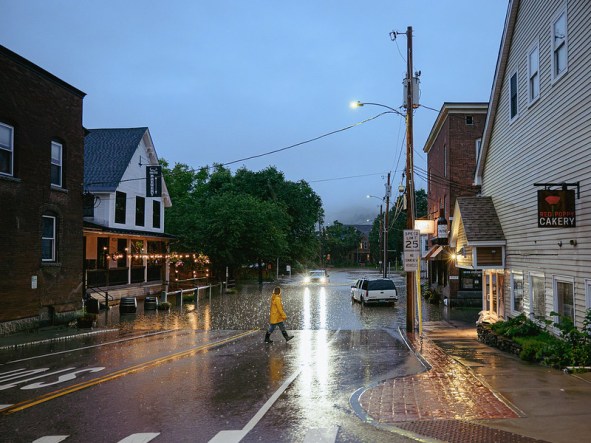
We woke up to a new reality in Ithaca and Tompkins County this week. Smoke from hundreds of wildfires in Canada filled the air, carried south by the jet stream. We’re used to complaining about the gray weather in the Finger Lakes, but this was different. The sky turned yellow, brown, and orange, casting an apocalyptic-like glow across our much-loved landscape, and temperatures dropped rapidly as the sun dimmed.

Schools canceled outdoor activities, the public health department urged people to stay indoors, and masks put away after the COVID pandemic were retrieved. This wasn’t supposed to happen here. We thought we were spared the awful consequences of wildfires spreading destruction, fear, and even death. We thought these kinds of events were confined to the West, not something we had to worry about in verdant upstate New York

Quebec wildfire in June.

We found out this week, however, that smoke doesn’t respect national borders and far-flung catastrophes thousands of miles away can have a terrible impact on our community here. The planet, it turns out, is a small place.

“As Smoke Darkens the Sky, the Future Becomes Clear” — that was the headline of David Wallace-Wells’ New York Times column on Wednesday. The lesson is a simple one: as the planet heats up, the fuel for wildfire dries out, waiting to burst into flames. Wallace-Wells recounts a recent interview with John Vaillant, author of “Fire Weather: A True Story From a Hotter World,” in which he observes ominously that “Fire isn’t going away. We’re going to be burning for this entire century.”

Understanding that we are entering a new epoch, what fire historian Stephen Pyne calls “the pyrocene,” brings new urgency to the task of building electrification and decarbonization. We need to renew our commitment to reducing greenhouse gas emissions in Ithaca and Tompkins County and work to make the future less harrowing for the generations to come.

This smoke-filled week has also underscored the importance of getting our elected officials to take action on the key climate and energy issues before them. It’s been especially frustrating to watch the current legislative session in Albany wind down as many crucial bills remain stuck in committee. This is especially true in the General Assembly, where the leadership has sat on legislation that would clearly pass if sent to the floor.

There have been some significant victories, among them the All-Electric Building Act, the nation’s first ban on the use of fossil fuels in new construction, and the Build Public Renewables Act, which will expand the development of publicly-produced clean energy. Furthermore, a dangerous effort to water down the state’s landmark climate law was defeated.

But it remains to be seen if the Senate-approved NY HEAT Act, which would end subsidized gas hookups and reduce utility bills for low- and middle-income families, will be acted on in the waning hours of the General Assembly session. In addition, efforts to end at least some of the $1.4 billion annual tax subsidies for fossil fuels, reduce plastic packaging, divest the state teachers’ pension fund from fossil fuels, make climate polluters pay for the ongoing environmental damage they have caused, and provide protections for environmental justice communities languish in the wings. It is a mixed record at best.

As Philip Kennicott reminds us in yesterday’s Washington Post, “change is possible” and “the world doesn’t need to be this way.” In his words, “The tools we need to reverse climate change are already here, and perhaps even better ones will emerge.” Clearly, the time to put these tools to work is now.

No Watering Down the NYS Climate Law

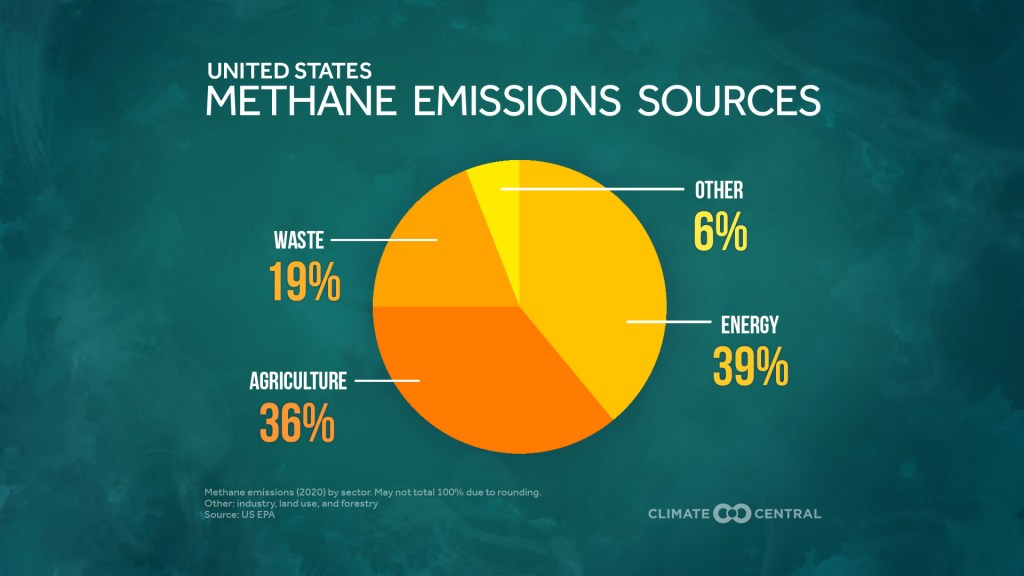
We know from the work of Cornell University Professor Robert Howarth and other scientists that two properties of methane make it a critical greenhouse gas: on the one hand, it has roughly 80 times the warming power of carbon dioxide over a 20-year period, and on the other, it begins to dissipate in the atmosphere after a decade, as opposed to many centuries for carbon dioxide. Together these characteristics mean that rapidly cutting methane can have a major impact in the near future on heading off runaway climate change.

For this reason Howarth, a member of the NY Climate Action Council (CAC), sought to secure a new approach to methane emissions as part of the 2019 Climate Protection and Community Leadership Act (CLCPA), measuring them over a 20-year time frame rather than the 100-year time frame previously used in the state. Doing so, in his words, provided NY policymakers with a tool that “more heavily weighs the role of methane as an agent of warming over the next few decades.”


Dropping a Bomb

Most officials in Albany and the climate and environmental justice movements assumed this change was a settled matter following the release of the CAC’s final scoping plan last December.

But in early April Gov. Kathy Hochul indicated her support for bills sponsored by Democratic chairs of the State Senate and General Assembly energy committees to abandon the new method of methane accounting embedded in the climate law and the CAC report, reverting to the 100-year time frame.

Highlighting the Hochul administration’s support for this initiative, the co-chairs of the CAC published an opinion article arguing that the change was necessary to protect “the competitiveness of our businesses” and retain jobs. “As it stands today, the climate act’s emissions accounting method is certain to be a major driver of future costs for New York families,” wrote Basil Seggos, commissioner of the NYS Department of Environmental Conservation, and Doreen Harris, president and CEO of the New York State Energy Research and Development Authority.

Besides the proposed alteration in measuring methane emissions, the bills introduced by Sen. Kevin Parker (D-Brooklyn) and Didi Barrett (D-Hudson) would exclude emissions generated by the combustion of biomass and biofuels from statewide totals of GHG emissions and include anaerobic digestion and forest biopower in the state’s definition of “renewable energy systems,” contrary to the CLCPA and CAC.

A Fierce Reaction

Coming in the midst of budget negotiations, these moves set off a firestorm. Opponents in the climate and environmental movements rallied immediately, asserting that the bills would deliver a “a body blow” to the nation-leading climate law and constituted “an accounting trick” designed to placate the oil and gas lobby. “Governor Hochul would side with the fossil fuel industry to torpedo New York’s landmark climate law, along with her own budget proposals to address the climate crisis, should she move forward with a proposal to weaken the state’s accounting for methane emissions,” said Liz Moran, the NY policy advocate for Earthjustice. TCCPI joined dozens of other groups in sending a memo of opposition within 24 hours of the breaking news.

The ability of so many organizations to mount a powerful campaign of phone calls, emails, and social media messages on such short notice was both impressive and inspiring. The depth and breadth of the backlash clearly came as a surprise to the Hochul administration. Two days after the Seggos and Harris op-ed, Gov. Hochul backed off the drive to weaken the climate law as part of the budget negotiations. It was not a coincidence that this took place the same day that Howarth and two dozen other scientists from Cornell University, Stanford University, and the Massachusetts Institute of Technology sent a letter of protest.

In the end, at least for now, science won and the fossil fuel industry lost. There is a distinct possibility, however, that the attempt to water down the climate law will raise its head again following the approval of the state budget. As it is, the proposal to redefine renewable energy to include biofuels is still on the table. Both this and the effort to change the methane accounting rule must be kept from becoming law.

It is one thing to stop these kinds of ill-considered and ill-timed moves and another to achieve victory for the crucial climate justice and clean energy legislation still under consideration in Albany. The so-called “conceptual agreement” on the budget reached  on April 27th includes a ban on the use of fossil fuels in new construction, and the proposal for a cap-and-invest program is still in the mix. The details of both, however, as well as the fate of other important climate and energy bills, remain uncertain.

Time grows short to implement the measures necessary to ensure the success of the CLCPA and bolster the CAC’s plan to avoid even worse climate chaos. The lesson to be learned from the latest developments is clear: the only real possibility of success in the face of the relentless pressure brought to bear by the oil and gas lobby is unstinting collective action by well-organized citizens fighting for their communities. We must remain vigilant and make sure our elected representatives hear us.

Climate Action & the NY Fossil Fuel Industry

The 2023 session of the New York state legislature is well underway at this point, and a flurry of important climate and clean energy bills have been introduced in the General Assembly and State Senate. Following the recent release of the state plan approved by the Climate Action Council, as required by the 2019 Climate Leadership and Community Protection Act (CLCPA), lawmakers are seeking ways to buttress its recommendations.

State legislators welcome Gov. Hochul for her 2023 State of the State address. Photo courtesy of NYS Senate Media Services licensed under CC By 2.0.

Given the potential of the various proposals to accelerate an equitable energy transition, it’s not surprising they have stirred up opposition and anxieties. In particular, the fossil fuel industry has mounted an aggressive lobbying campaign to undermine these far-reaching efforts and hamper the ability of the state to meet its climate targets.

A recent report issued by the nonprofit Public Accountability Initiative lays out in great detail the attempts of the industry to obstruct climate action in New York. It points out that millions of dollars have been spent by the industry and its supporters “to delay, water down and otherwise frustrate the implementation of the CLCPA and other key climate legislation.”

“Legislators, communities and other stakeholders invested in a cleaner, greener, decarbonized future for New York must stay vigilant around efforts by the fossil fuel industry to muzzle and erode” the state’s climate actions, the report warns.

Not only are the oil and gas industry representatives engaging in aggressive inside lobbying of legislators in Albany, they are working hand in hand with gas utilities to disseminate misinformation among the general public, muddying the waters and generating unwarranted fears. Deploying online ads and robocalls, they are raising the prospect of “power outages and cost increases.” “We need all energy options to keep the lights on and heat flowing,” they misleadingly claim.

The fossil fuel companies have been mobilizing their customers to contact state lawmakers and express their opposition to building electrification. What’s especially galling is that New York State hands out about $1.5 billion each year in tax subsidies to these companies, which are then turning around and spending a significant portion of the dollars to fund their misinformation and lobbying machine.

There is hope, however, that this time the industry will not be as effective as it has been in the past at stopping crucial climate action. Rich Schrader, New York State policy director at the Natural Resources Defense Council, notes that the oil and gas groups engaged in these tactics last year and have now lost the element of surprise. In addition, the advantages of new technologies such as cold-weather heat pumps have come into sharper focus.

“The politics have changed, information has changed, and the [federal] incentives are much clearer now,” he observes. “All that weighs against their propaganda.”

Turning Up the Heat on Climate Action in Albany

The Climate Action Council has delivered a sound and comprehensive plan for meeting the crucial targets of the 2019 Climate Leadership and Community Protection Act, which established the Council and charged it with putting together the plan. The question now is whether Gov. Hochul and the state legislature will step up and provide the necessary backing to ensure the plan’s success.

This year’s legislative session has been underway for too little time to reach any conclusions about the work of the General Assembly and State Senate, but the governor has laid out her priorities in the January 10th State of the State address, as well as in the proposed executive budget issued on February 1st. It’s a mixed record so far.

Renewable Heat Now rally at the state capitol on January 24. Photo credit: Sane Energy Project.

Hochul underscored once again her support for phasing out fossil fuel heating and appliances in new construction, a position she announced in last year’s executive budget. In addition, she backed the Climate Action Council’s call for a cap-and-invest program, a vehicle for funding climate action, and proposed modest programs to improve energy affordability.

But the governor’s actions fell short on several key fronts. Most important, she wants to push back the date for a phase-out of fossil fuels in newly-constructed small buildings to 2026 and to 2029 for high rise buildings.

These dates are one year longer than proposed in the final scoping plan and two years more than initially laid out in the draft plan. It’s a disappointing move, and flies in the face of mounting evidence that we need to speed up, not slow down, meaningful efforts to reduce greenhouse gas emissions. 

Fortunately, the state legislature has the opportunity to rectify the matter and restore the dates originally called for the in the draft scoping plan. The All-Electric Building Act excludes fossil fuel from new buildings, starting in 2024 with buildings under 7 stories and then 2027 for larger buildings. 

The Renewable Heat Now campaign, which has brought together over 220 organizations (including TCCPI), strongly backs this approach, urging legislators to stick with the earlier dates. It also proposes the following:

  • A funding package that includes a Green Affordable Pre-Electrification (GAP) fund, low interest financing, and additional funding for the NYSERDA’s Regional Clean Energy Hubs. Many homes in New York State have crucial health and safety issues, including mold, lead, gas, and/or carbon monoxide leaks. These issues must be remedied before an energy audit can be done to determine how to weatherize the home, save money, and make it electrification-ready. Families need financial and technical help to afford these critical retrofits addressing health and safety issues in existing buildings. This funding is necessary to ensure a just energy transition for all New Yorkers.
  • The NY Home Energy Equitable Transition (HEAT) Act eliminates over $200 million per year in subsidies for new gas hookups, enables neighborhood-scale building decarbonization, and improves energy affordability by eliminating the costly “obligation to serve” gas regulation, and ensuring no household pays more than 6% of their income for energy.
  • The Energy Efficiency, Equity, and Jobs Act deploys funding for cost-saving energy efficiency retrofits where they are most needed, removes health hazards from homes so they can undergo energy efficiency retrofits, and ensures that the workers hired for energy efficiency upgrades come from disadvantaged communities.

Another important bill, part of NY Renews’ Climate, Jobs, and Justice campaign (and also supported by TCCPI), would eliminate over $330 million of the most egregious state subsidies handed out each year to the fossil fuel industry. The Stop Climate Polluter Handouts Act preserves tax exemptions that help low- to moderate-income households, including a home-heating credit and an agricultural exemption for small- to mid-sized farmers.

Together these proposals will significantly strengthen the state’s climate action plan and correct some of the serious flaws in Gov. Hochul’s climate agenda. The next few weeks in Albany will be telling, so now is the time to make our voices heard. 

The Climate Action Council Delivers

The Climate Action Council, in a momentous step on December 19, approved the state’s Final Climate Scoping Plan in a 19-3 vote. This plan provides a detailed guide to reaching the ambitious climate goals delineated in the 2019 Climate Leadership and Community Protection Act, including 70% renewable energy by 2030 and 100% zero emission electricity by 2040. The ramifications are far reaching: New York must retire fossil fuel plants and stop burning fossil fuels like gas in buildings. This critical milestone represents the culmination of over three years of collaboration and over a hundred meetings, and includes contributions from the Council’s Advisory Panels and Working Groups. The release of the Draft Scoping Plan exactly one year ago led to a public comment period that included 11 public hearings across the state and more than 35,000 written comments.
Meeting of NYS Climate Action Council

The first meeting of the Climate Action Council took place in March 2020. Photo credit: NYSERDA.

The scoping plan establishes a comprehensive foundation for dramatically lowering greenhouse gas emissions, electrifying buildings and transportation systems, securing climate justice, and advancing New York’s commitment to economy-wide carbon neutrality by 2050. It outlines changes in state policy that, if implemented, will not only move New York away from fossil fuels but also towards a just energy transition, one that will finally address the harm that pollution from conventional energy systems have inflicted on frontline communities. It identifies strategies to reduce the environmental burden of greenhouse gas emissions and associated pollutants suffered by these communities as well as address energy affordability. The scoping plan makes clear that the benefits of the clean energy transition must not overlook workers and communities that have relied on the fossil fuel economy for their livelihood, and emphasizes that they should not be left behind. At the heart of the scoping plan is a determination to make sure that the advancement of a clean energy economy results in new economic development opportunities throughout the state and supports long-term, well-paying jobs. At the same time, the plan offers recommendations regarding how to provide support and tools to workers and communities affected by the energy transition. What happens if the plan is not implemented? The state estimates that the cost of inaction will exceed the cost of action by more than $115 billion. That’s a big price tag for failing to stave off runaway climate change and ignoring environmental justice and health concerns. Make no mistake, the plan is not perfect. The final draft postpones the dates by which New York will move away from fossil fuel use for construction of new homes and commercial buildings, putting them off one year later than in the draft plan passed in December 2021. To take just one example, the prohibition of fossil fuels in new construction for single family homes will occur in 2025, not 2024. As Cornell Professor Robert Howarth, a member of the Climate Action Council, points out, this delay is especially disappointing given that the building sector is the largest source of greenhouse gas emissions. Another area inviting scrutiny involves “renewable natural gas” and hydrogen for use in gas pipelines, a ploy by the fossil gas industry to extend its operation and profits into the future. Raya Salter, founder and executive director of the Energy Justice Law and Policy Center and member of the Climate Action Council, rightly terms these so-called alternative fuels “a dangerous distraction.” In her words, “there is at best a limited role for alternative fuels, which are in many cases infeasible, costly, untested, leak-prone and carbon intensive to produce.” Despite these flaws, the scoping plan marks a crucial turning point in New York’s energy transition and establishes an important framework for moving forward. Next steps include presentation of the plan to the governor and state legislature, and the creation of new rules and regulations to take into account its recommended policy changes. As this process unfolds, we should all work to ensure that the scoping plan is funded and fully implemented to ensure a just transition for all New Yorkers.

NY Renews Seeks to Implement State Climate Law

​The following piece appeared in the November 9th issue of the Tompkins Weekly.

Luis Aguirre-Torres’s recent decision to step down as the Ithaca city sustainability director came as a deep disappointment to many in Tompkins County. His plan to make the city carbon neutral by 2030 while making sure climate justice was central to this endeavor was ambitious and inspiring and embodied the spirit and vision of the Ithaca Green New Deal (IGND).

Fortunately, Rebecca Evans remains in place as the city sustainability planner. Her expertise, experience and talent, as well as a longstanding commitment to a just and equitable society, will help ensure that the IGND maintains its momentum. But the community also needs to stay engaged and support her work if the IGND is to meet its goals and continue serving as a national model.

Attendees at a recent climate rally in Ithaca.

Besides joining in local activism to promote the IGND, it is important that Tompkins County residents advocate at the state level for effective climate and clean energy policies. The passage in 2019 of the Climate Leadership and Community Protection Act (CLCPA), the nation’s most progressive climate law, carved out the path for moving forward.

This landmark legislation calls for 70% renewable energy in the state by 2030, 100% zero emission electricity in the state by 2040 and an 85% reduction in greenhouse gas emissions by 2050.

NY Renews, a coalition of more than 320 environmental justice, community, faith, labor and multi-issue organizations, played a key role in getting the CLCPA on the books three years ago. Local organizations in the statewide coalition include Climate Justice Cornell, Sunrise Ithaca, Sustainable Finger Lakes and the Tompkins County Climate Protection Initiative.

With the CLCPA signed into law, the fight has shifted to the enactment of legislation needed to achieve its critical goals. As part of this effort, NY Renews recently announced the public campaign launch for its Climate, Jobs, and Justice Package. The campaign seeks to build public support for this crucial set of bills ahead of the legislative session that kicks off in January 2023.

The Climate, Jobs, and Justice Package, if approved by the State Legislature, will rapidly decarbonize New York, make the state healthier and more equitable, ensure a just transition for workers and help create an accessible green economy for all. Overall, the bills individually and collectively advance the goals of the CLCPA.

Beginning Nov. 16, communities across the state will be rolling out the Climate, Jobs, and Justice Package, looking to make the promises of the CLCPA a reality. The Ithaca event, sponsored by Climate Justice Cornell and others, will be Nov. 18 at 5 p.m. at Thompson Park, across from Gimme! Coffee on North Cayuga Street. People planning to attend can RSVP here.

“Ithacans have fought hard to ensure that equity is at the center of the IGND, and the Climate, Jobs, and Justice Package would extend that commitment to the state level,” said Siobhan Hull, coordinator of Sunrise Ithaca and member of Climate Justice Cornell. “As vulnerable New Yorkers continue to be hardest hit by pollution, economic recessions and the COVID-19 pandemic, it is more important than ever to invest in our frontline communities and secure a just transition for all.”

The Climate, Jobs, and Justice Package has three main components: 1) fully fund the CLCPA so that it can achieve its objectives; 2) build renewable energy for all and create green union jobs; and 3) hold polluters accountable and ensure everyone pays their fair share in taxes. The details for each of these include:

1. Fully fund and implement New York’s Climate Act

Climate and Community Protection Fund creates a pool of money to ensure sufficient investment to fund the CLCPA. The act’s core investments would include broad labor, procurement, community benefits and responsible contracting standards.

2. Build renewable energy for all and create good, green union jobs

Build Public Renewables Act would allow the New York Power Authority to build new large-scale renewables more quickly, effectively and democratically than private developers.

Climate Accountability Act provides state agencies with the authority and guidance required to implement the Climate Act and ensure that our energy system is accountable and transparent to the public.

Gas Transition and Affordable Energy Act will give the Public Service Commission the power and direction to align gas utilities with the Climate Act’s emission reduction and climate justice mandates.

Blueprint Bill provides a plan to direct the replacement and redevelopment of New York state’s fossil fuel facilities and sites by 2030.

3. Make polluters and the wealthiest New Yorkers pay what they owe

Climate Change Superfund Act makes the state’s worst polluters, major oil companies, pay for the harm they’ve caused.

Fossil Fuel Subsidy Elimination Act will end the most egregious state subsidies of $330 million each year to the fossil fuel industry, a major contributor to the climate crisis.

Invest in Our New York’s Plan to Fund Our Future is a revenue and spending package from the Invest in Our New York (IONY) coalition that will ensure the state eliminates wasteful handouts to businesses and the wealthiest New Yorkers pay their fair share to fund our climate law.

Make no mistake, securing the passage of the Climate, Jobs, and Justice Package will not be easy. Implementing these kinds of transformative policies will always generate opposition. In this case, the fossil fuel industry has mounted an aggressive lobbying campaign to undermine the state’s climate targets.

new report just released by the nonprofit Public Accountability Initiative describes in devastating detail the attempts of various players in the fossil fuel industry to obstruct climate action in the state. According to the report, millions of dollars have been spent by the industry and its supporters “to delay, water down and otherwise frustrate the implementation of the CLCPA and other key climate legislation.”

The study points to the presence of fossil fuel executives on the Climate Action Council, the body appointed to create a roadmap for meeting the climate and energy goals of the CLCPA, and questions their support of the state’s clean energy initiatives.

“Legislators, communities and other stakeholders invested in a cleaner, greener, decarbonized future for New York must stay vigilant around efforts by the fossil fuel industry to muzzle and erode the state’s most far-reaching climate legislation ever passed,” cautions the report.

So, keeping these words in mind, be sure to attend the unveiling of NY Renews’ Climate, Jobs, and Justice Package at Thompson Park on Nov. 18, and demonstrate your support for real climate action that will bring about a greener, healthier and more equitable future for all New Yorkers.

The Acceleration in Global Renewables

The latest report from the climate front is a doozy. According to a new study, the global warming that has already occurred will cause a sea level rise of more than 10 inches from the melting of the Greenland ice sheet alone. That much is baked in. How much worse can it get? “With continued carbon emissions, the melting of other ice caps and thermal expansion of the ocean,” the Guardian warns, “a multi-metre sea-level rise appears likely.”

Obviously, this is very bad news for the nearly 600 million people who live in coastal zones worldwide.

Aftermath of flooding in Pakistan.

It comes on top of record-breaking heat waves in China and South Asia, the worst drought in Europe in 500 years, the continuing megadrought in the U.S. Southwest, massive wildfires in Spain, Italy, Portugal, Greece, France, and Germany, and catastrophic floods in Pakistan and Afghanistan.

Evidence of a climate emergency could hardly be clearer. In Bill McKibben’s words, “We live on a different planet than we used to.”

Fortunately, there are solutions at hand that don’t require bleeding edge technologies. They do, however, require political will to implement, and that’s why the passage of the Inflation Reduction Act (IRA) is so important.

Clearly, the IRA doesn’t approach the scale demanded by the current climate crisis, but it sets the ball in motion, creating a dynamic that could very well generate its own momentum. Finally, after years of inaction, the federal government has exerted powerful leadership to deal with a rapidly warming world.

Signed into law by President Biden earlier this month, the IRA commits $369 billion to carrying out climate and clean energy measures, by far the largest such investment in U.S. history. Adopting a carrots rather than stick approach, it represents a major change in policy direction. Instead of calling for carbon taxes to discourage fossil fuel use, it focuses on incentives to spur investments in renewables and energy efficiency, mainly in form of tax credits.

The IRA is far more modest than the Build Back Better Act and it includes significant concessions to the fossil fuel industry. Even so it’s projected to cut U.S. emissions by 40% by 2030, compared with 2005 levels. Economists, furthermore, estimate that Americans will save as much as $200 billion over the next decade on electricity bills thanks to the new law, challenging the belief that the energy transition will mean higher prices.

Perhaps the best thing about the IRA is the fact that it comes right as the adoption of renewables has picked up dramatic speed. As David Wallace-Wells observes, the public investment will benefit from “much broader tailwinds” than just a few years ago. For example, the amount of electricity generated by renewable resources in the U.S., which was only 8.6% in April 2001, hit a record 28% this April.

In fact, wind and solar installations have made up an impressive majority of new power plants added to the national grid in recent years. In the first six months of 2022 wind and solar accounted for two-thirds of the new U.S. electrical generating capacity. The country’s investments in clean energy have grown from $10 billion in 2004 to $105 billion in 2021.

Globally, the picture is similarly positive; renewable energy production has increased 400% in the past decade. The renewable investment of $226 billion worldwide in the first half of 2022 set a new record, jumping 11% in the first six months relative to same period in 2021. Investment in solar was up 33% and 16% in wind. Renewables are now the cheapest form of power in many countries, including the U.S.

So, yes, the sea level is rising and that’s scary. But the shift to renewables is accelerating and that’s exciting. There’s little question that climate chaos is causing great damage and will continue to do so. If we work hard to push the energy transition forward, however, we can limit this destruction and bequeath a better world to the generations that follow us.

Tompkins County Works to Reduce GHG Emissions

This piece originally appeared in the August 10th issue of the Tompkins Weekly.

A coalition of activist leaders and concerned citizens, TCCPI meets monthly to discuss and share information about what we can do locally to shrink our carbon footprint and help the community meet its ambitious climate goals. The new report includes 36 submissions and covers a wide range of inspiring activities that reflect the commitment and engagement of hundreds of individuals working together locally to better our world.

A view of Cayuga Lake. Environmental efforts across Tompkins County help protect this crucial natural resource.

Below is just a small sample of what the report covers. The full, text-only version can be found at tccpi.org/tccpi-2021.html. If you’d like a free PDF copy of the illustrated 37-page report, contact us at info@tccpi.org.

The biggest news of 2021 was the Ithaca Common Council’s vote in November to begin decarbonization of the city’s 6,000 buildings (tinyurl.com/26y8exs5). Under the leadership of Luis Aguirre-Torres, who came on board in March as the city’s sustainability director, the plan secured $105 million in private investment to carry out energy efficiency retrofits and install heat pumps.

The initiative followed the adoption in June of the Ithaca Energy Code Supplement requiring net-zero construction for new buildings by 2026. The city also launched a process to implement all-renewable community choice aggregation for residents and proposed a 25-acre solar array in the southwest area of the city.

Other municipalities took important steps to facilitate the transition to clean energy. Tompkins County developed a Green Facilities Plan (tinyurl.com/ycglol6a) to improve energy efficiency of its buildings, and the Legislature approved a $7 million bond to kick off phase one of the plan.

The Town of Ithaca also adopted the Energy Code Supplement and joined with the city to develop a community choice aggregation program. The towns of Ithaca, Caroline, and Dryden conducted clean heating programs in partnership with HeatSmart Tompkins, resulting in grant funding and numerous heat pump installations.

Dryden adopted the NYS Stretch Code to require higher energy efficiency in new construction and, along with the town of Ithaca, continued to install LED streetlights.

The highlight of 2021 in the transportation sector took place on Earth Day when Tompkins Consolidated Area Transit (TCAT) unveiled its first-ever fleet of electric buses. The Center for Community Transportation (CCT), Cornell Cooperative Extension of Tompkins County (CCE-Tompkins), and Downtown Ithaca Alliance (DIA) carried out key efforts to reduce greenhouse gas emissions.

CCT’s Ithaca Carshare, Bike Walk Tompkins (and its signature program Streets Alive! Ithaca) and Backup Ride Home all continued to play vital roles in promoting alternatives to car ownership and single-occupancy commuting, as did CCE-Tompkins’ Way2Go and DIA’s GO Ithaca.

CTC and CCE-Tompkins also collaborated on identifying and addressing barriers to the wider adoption of electric vehicles (EVs) among underserved populations. In addition, TCAT, Ithaca Carshare, and CCE-Tompkins partnered on several events offering opportunities to see EVs and speak with EV owners. Both Tompkins County and Ithaca Carshare added several EVs to their fleets, and the city explored ways to electrify its fleet and deploy a shared electric bike program.

Recycling, reuse and waste management also saw significant new developments in 2021. Finger Lakes ReUse made perhaps the biggest splash with its opening of the ReUse MegaCenter at Triphammer Marketplace. The new location, with a half-acre of retail space, is now one of the largest reuse business locations in upstate New York.

In all, Finger Lakes ReUse diverted an estimated 1,023 tons of materials through its three locations, including furniture, building materials, housewares, electronics, books, textiles, appliances, and more.

Cornell University has reduced campus waste by one-third in the last five years, and reuse and reclamation doubled in the last year.

Twelve restaurants and eateries on The Commons support Zero Waste Tompkins’ Ithaca Reduces program by asking customers to bring their own containers and cups. Furthermore, downtown Ithaca has about a dozen independent, locally owned stores that specialize in reuse and recycled products.

Education and advocacy were crucial components of the climate protection effort in 2021. Cornell and CCE-Tompkins, in particular, played major parts on the education front. Thanks to the ongoing integration of sustainability into campus learning and research, 100% of Cornell students now graduate with sustainability learning outcomes, beginning with a requirement that all incoming students complete a sustainability assessment and learning module.

Over 40 living laboratory projects take place each year using the campus as an innovation hub for sustainability solutions. Students can major, minor or concentrate in 87 programs focused on sustainability. Nearly all academic departments are currently undertaking sustainability-focused research, including 619 faculty fellows associated with the Cornell Atkinson Center for Sustainability.

These and other achievements earned the university a third consecutive Platinum rating in 2022 from STARS, the international gold standard for assessing campus sustainability work.

At CCE-Tompkins, the Energy and Climate Change team worked with city staff and other key community stakeholders to explore strategies for community education and outreach around the Ithaca Green New Deal (IGND). The city sustainability office and CCE-Tompkins joined with the training program Roots of Success to begin development of a regional workforce training ecosystem.

In addition, CCE-Tompkins staff created resources for CCE educators across the state on large-scale solar development and reducing energy use. Get Your GreenBack, which became part of CCE-Tompkins in late 2021, saw its volunteer Energy Navigator program expand dramatically with a NYSERDA grant to revise its curriculum and take its operation statewide.

The tiny home PowerHouse proved to be a big hit, demonstrating at outreach events and school programs how to reduce energy use and transition to renewable energy. Together with HeatSmart Tompkins and Sustainable Finger Lakes (formerly Sustainable Tompkins), these efforts helped to increase the adoption of home energy retrofits and heat pumps.

PRI/Museum of the Earth, the Sciencenter, New Roots Charter School, the Ithaca 2030 District, TCCPI and the Tompkins County Environmental Management Council carried out other important educational work regarding climate, energy and sustainability in 2021.

Advocacy activities took on an increasing sense of urgency as climate change accelerated in 2021. The local chapters of Citizens Climate Lobby and Climate Reality Project worked to raise awareness about federal legislation such as the carbon dividend bill and the state’s Climate Leadership and Community Protection Act, which in 2019 established aggressive climate targets.

Fossil Free Tompkins (FFT) and HeatSmart Tompkins actively participated in the statewide Renewable Heat Now coalition, which scored important victories in the recent legislative session, including passage of a moratorium on the use of fossil fuel plants for cryptocurrency mining.

FFT and other local environmentalist organizations campaigned to ensure that Greenidge Power Plant did not get its air permit renewed, and these groups also supported the successful purchase by Finger Lakes Land Trust of NYSEG’s Bell Station property. Sunrise Ithaca held events throughout 2021, including a Green Building Policy Town Hall, several climate rallies and a community forum on the implementation of the IGND.

At the heart of all this outstanding work, as always, was the Park Foundation. Without its generous, ongoing financial support and guidance, many if not most of the activities captured in the TCCPI report would not have occurred. The community owes a debt of gratitude to the foundation and its extraordinary record of civic betterment.