Viewing the Climate Through Wildfire Smoke

We woke up to a new reality in Ithaca and Tompkins County this week. Smoke from hundreds of wildfires in Canada filled the air, carried south by the jet stream. We’re used to complaining about the gray weather in the Finger Lakes, but this was different. The sky turned yellow, brown, and orange, casting an apocalyptic-like glow across our much-loved landscape, and temperatures dropped rapidly as the sun dimmed.

Schools canceled outdoor activities, the public health department urged people to stay indoors, and masks put away after the COVID pandemic were retrieved. This wasn’t supposed to happen here. We thought we were spared the awful consequences of wildfires spreading destruction, fear, and even death. We thought these kinds of events were confined to the West, not something we had to worry about in verdant upstate New York

Quebec wildfire in June.

We found out this week, however, that smoke doesn’t respect national borders and far-flung catastrophes thousands of miles away can have a terrible impact on our community here. The planet, it turns out, is a small place.

“As Smoke Darkens the Sky, the Future Becomes Clear” — that was the headline of David Wallace-Wells’ New York Times column on Wednesday. The lesson is a simple one: as the planet heats up, the fuel for wildfire dries out, waiting to burst into flames. Wallace-Wells recounts a recent interview with John Vaillant, author of “Fire Weather: A True Story From a Hotter World,” in which he observes ominously that “Fire isn’t going away. We’re going to be burning for this entire century.”

Understanding that we are entering a new epoch, what fire historian Stephen Pyne calls “the pyrocene,” brings new urgency to the task of building electrification and decarbonization. We need to renew our commitment to reducing greenhouse gas emissions in Ithaca and Tompkins County and work to make the future less harrowing for the generations to come.

This smoke-filled week has also underscored the importance of getting our elected officials to take action on the key climate and energy issues before them. It’s been especially frustrating to watch the current legislative session in Albany wind down as many crucial bills remain stuck in committee. This is especially true in the General Assembly, where the leadership has sat on legislation that would clearly pass if sent to the floor.

There have been some significant victories, among them the All-Electric Building Act, the nation’s first ban on the use of fossil fuels in new construction, and the Build Public Renewables Act, which will expand the development of publicly-produced clean energy. Furthermore, a dangerous effort to water down the state’s landmark climate law was defeated.

But it remains to be seen if the Senate-approved NY HEAT Act, which would end subsidized gas hookups and reduce utility bills for low- and middle-income families, will be acted on in the waning hours of the General Assembly session. In addition, efforts to end at least some of the $1.4 billion annual tax subsidies for fossil fuels, reduce plastic packaging, divest the state teachers’ pension fund from fossil fuels, make climate polluters pay for the ongoing environmental damage they have caused, and provide protections for environmental justice communities languish in the wings. It is a mixed record at best.

As Philip Kennicott reminds us in yesterday’s Washington Post, “change is possible” and “the world doesn’t need to be this way.” In his words, “The tools we need to reverse climate change are already here, and perhaps even better ones will emerge.” Clearly, the time to put these tools to work is now.
Building Electrification in the Empire State

New York burns more fossil fuels in its residential and commercial buildings than any other state in the country, a fact that underscores the importance of dramatically reducing the carbon footprint of our built environment to avert runaway climate change. As the New York legislature entered the final days of the 2022 session last week, however, prospects for passage of the All-Electric Building Act (AEBA) appeared dim.

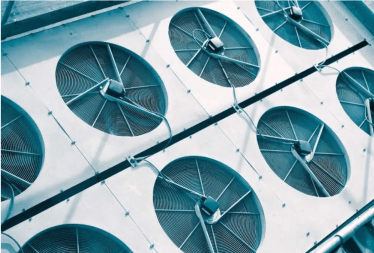
Commercial building heat pumpsThe AEBA would have required all new buildings starting in 2024 to be constructed using only electric appliances for heating, cooking, hot water, and drying clothes; in 2027, the standard would have applied to taller buildings as well.

Although other significant environmental and climate legislation did make it through, including the two-year moratorium on cryptocurrency mining produced by fossil fuel power plants, it was lights out for the AEBA when the session ended. The bill had strong support in both houses, but the leadership blocked it from going to the floor for a vote. It was a bitter disappointment for climate activists, especially in light of the Democratic majority in the state legislature.

Similar proposals have fared better elsewhere in the U.S. Washington became the first state in the country in April to effectively ban the use of natural gas in most newly constructed buildings, mandating the installation of all-electric heating and hot water systems. California adopted a new building code in August 2021 that established a strong preference for electric heating in new construction, although it did not impose an explicit ban on natural gas.

Closer to home, the Ithaca Common Council in May 2021 voted unanimously in support of an energy code supplement that required all new construction beginning in 2026 to be net-zero buildings that do not use fossil fuels except for cooking. New York City passed a law in December 2021 prohibiting the use of natural gas and oil burning systems in new construction starting in 2024, when developers would have to design buildings with all-electric heating, hot water, and cooking appliances.

The AEBA would have implemented a key recommendation of the Climate Action Council, which has been charged with developing a plan to achieve the goals established under the state’s 2019 Climate Leadership and Protection Act (CLCPA). The Draft Scoping Plan, released at the end of December 2021 for public comment, calls for the adoption of all-electric state codes that prohibit the use of fossil fuel for heating, cooling, hot water, cooking, and appliances by 2024 for new construction of single-family and low-rise residential buildings and by 2027 for multifamily buildings over four stories and commercial buildings (see pp. 125-28).Gov. Kathy Hochul’s State of the State address in January seemed to signal a green light for building decarbonization, and she included support for a ban on natural gas in new construction after 2027 in her executive budget, a move backed by the State Senate. The General Assembly, however, left it out of its one-house budget.

The failure of the state legislature to take action on the AEBA makes it very difficult for New York to meet the legal climate targets stipulated in the CLCPA. All the more reason, then, that concerned citizens should make their voices heard in support of the Draft Scoping Plan recommendations. Fortunately, there is still time to do so now that the public comment period has been extended to July 1. Comments may be submitted via the online public comment form, via email at scopingplan@nyserda.ny.gov, and via U.S. mail to Attention: Draft Scoping Plan Comments, NYSERDA, 17 Columbia Circle, Albany, NY 12203-6399. The Climate Action Council will issue a final draft of the climate plan by the end of the year.

Crunch Time on Climate Action in Albany

The future of climate action in New York State is at a critical inflection point. The new budget has been approved and the remaining weeks of the legislative session are now focused on policy proposals. At the same time, the draft Scoping Plan issued by the Climate Action Council at the end of 2021 has been undergoing scrutiny at public hearings around the state and only a handful more of these hearings remain.

When the New York Legislature convened in January, environmentalists and climate activists were hopeful that dramatic headway could be made on such issues as reducing the consumption of natural gas, building electrification, cryptocurrency mining, fossil fuel divestment, and investments in renewable energy development.

Perhaps not surprisingly, the oil and gas industry and its supporters have stepped up their opposition to these measures in recent weeks, spending millions of dollars on ad campaigns and lobbying, money that could be put towards a clean energy future.

The pushback has revealed the obstacles to phasing out fossil fuels even in a relatively progressive state such as New York. A recent Washington Post article highlighted the challenges faced by those who take the ambitious goals of the Climate Leadership and Community Protection Act seriously, focusing on the fight over banning natural gas use in new construction.

Gov. Kathy Hochul (D) included a ban on gas use in new construction by 2027 in her executive budget for the next fiscal year. But, by the time the negotiations came to a close, the proposal was absent from the final budget deal. The ostensible reason for its exclusion, according to a spokesperson for Assembly Speaker Carl Heastie, was that policy measures don’t belong in the proposed budget.

Climate advocates are now pressing state lawmakers to pass the measure as a stand-alone bill before the legislative session ends on June 2. The Renewable Heat Now coalition, in particular, is pushing for passage of the All-Electric Building Act as part of a package of proposals to reduce demand for fossil fuels and compel utilities to plan for a transition to renewable heat.

An organization called New Yorkers for Affordable Energy, essentially a front group for fossil fuel and utility companies and corporate lobbying interests, is mounting a well-oiled campaign to defeat the measure. It contends that banning gas use in new buildings would harm consumers. Among those behind the organization are National Grid, the American Petroleum Institute, the pipeline company Enbridge, and the Business Council of New York State. A recent investigative report concludes that “New Yorkers for Affordable Energy smacks as a classic industry-funded astroturf effort.”

The lines couldn’t be drawn more distinctly: on one side, the backward-looking oil and gas companies, utilities, and other corporate defenders of the fossil-fuel status quo, and on the other, citizens, activists, and other members of the public who want a decent, bright future where runaway climate change has been averted, mass species extinction avoided, and clean air and water acknowledged as fundamental human rights.

The next few weeks will tell us unambiguously where Gov. Hochul and the state legislature stand. In the meantime, we must make our voices heard in Albany as loudly and clearly as possible.