NY State Energy and Climate Policy in 2025

It’s an understatement to say that 2025 was not a good year for renewable energy and climate change policy in New York. The state experienced significant policy uncertainty this past year in these two areas, to put it kindly.

Certainly, New York continued to invest in renewable energy infrastructure and climate adaptation strategies. The execution in May of 26 large-scale land-based renewable energy contracts that will generate more than 2.5 GW of clean capacity, underscored the Hochul administration’s ongoing commitment to renewable energy deployment.

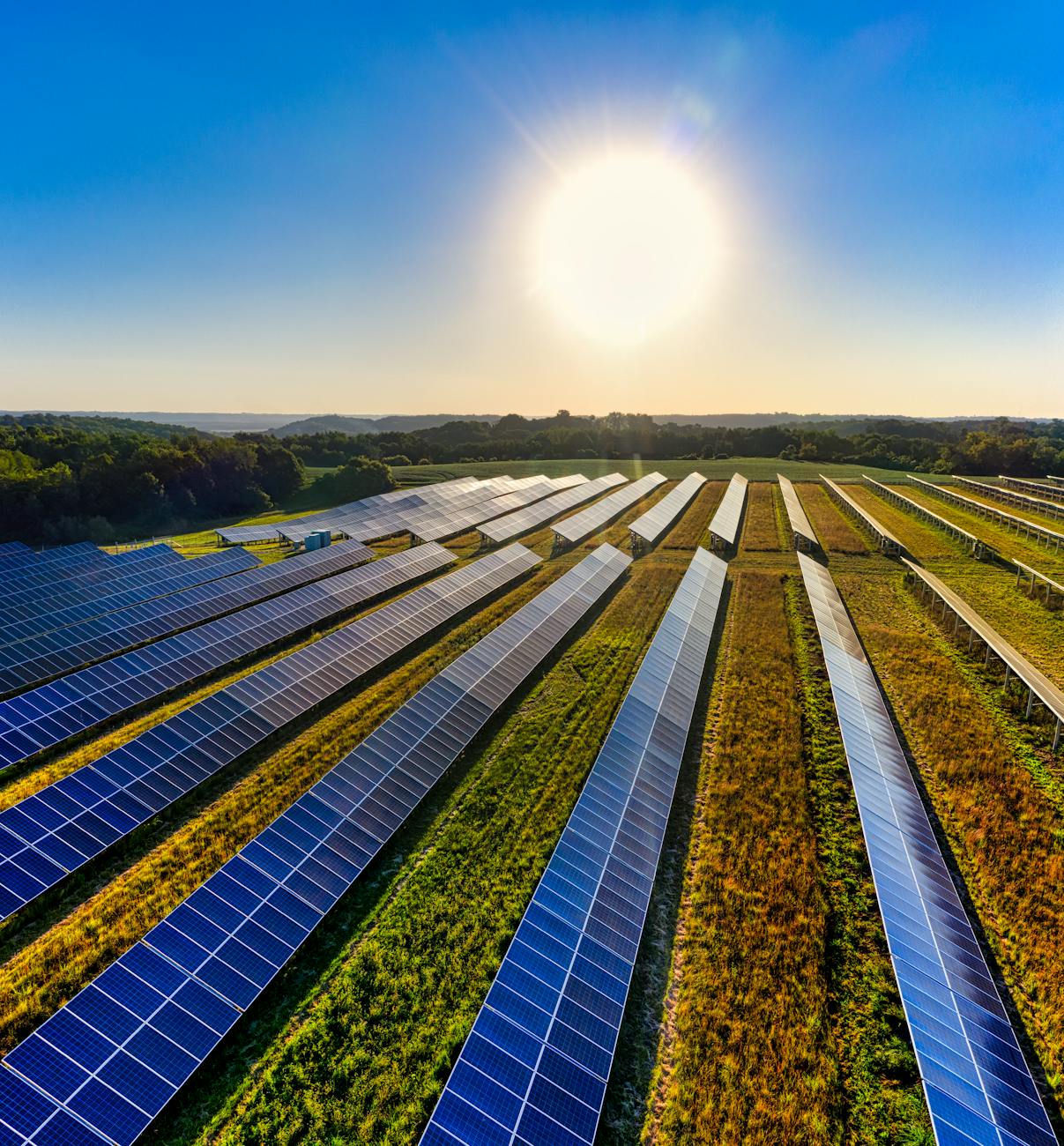
Photo by Tom Fisk on Pexels.com

In addition, the state has backed major green initiatives such as a broader Sustainable Future Program that allocates $1 billion to expand energy efficiency, decarbonization of buildings, and thermal energy networks, investments intended to reduce emissions while making the energy transition more affordable.

Yet these achievements were overshadowed in 2025 by growing concerns about policy direction and ambition.

The Hochul Administration Pullback

The Hochul administration faced strong criticism in 2025 from climate advocates for its pullback in the implementing climate policy. The state’s contentious handling of the proposed Cap-and-Invest program — an economywide carbon pricing system designed to generate revenue for climate initiatives while creating enforceable emissions caps — attracted much of this criticism. Although the program was expected to be finalized in 2025, Gov. Hochul spent much of the year putting in roadblocks that hindered its implementation.

Delays and administrative resistance in rolling out greenhouse gas emission regulations required by the CLCPA, including sections of the cap-and-invest framework, has generated much consternation. State agency decisions such as allowing previously denied permits for natural gas infrastructure have signaled a shift toward accommodating traditional energy interests at the expense of stricter climate enforcement. This will undoubtedly slow progress toward legally mandated emissions targets.

The administration has justified such a cautious approach as necessary to balance climate ambition with affordability, a framing that weighs public concerns over energy costs against the urgency of decarbonization. Nonetheless, environmental groups argue that these pullbacks risk New York falling short of statutory reductions and undermine the leadership role the state had positioned for itself. Critics also contend that reduced emphasis on building public renewables may forgo lower-cost clean energy and job opportunities.

Trump’s Energy and Climate Actions

Federal policy further complicated New York’s energy and climate trajectory in 2025. During President Trump’s second term, there has been a pronounced rollback of federal climate policies and a rush toward fossil fuel development. Key actions include withdrawal from the Paris Agreement, deregulatory measures at the Environmental Protection Agency (EPA) to dismantle numerous environmental protections, and administrative opposition to renewable energy projects.

Most consequential for New York has been federal interference with offshore wind development. Earlier this month, the Trump administration paused leases for multiple East Coast offshore wind farms, including Empire Wind and Sunrise Wind, citing national security concerns, a move that directly threatened New York’s offshore wind ambitions.

Other federal actions such as the elimination of clean energy tax incentives and cancellation of billions in funding for clean energy projects undermined the economic viability of deploying renewables at scale, particularly in states like New York that count on these incentives to attract investment. Alongside rollbacks of vehicle emission standards and other emissions safeguards, these federal shifts have seriously constrained the state’s ability to achieve its climate goals, creating regulatory conflict between state and federal priorities.

Repercussions for the City of Ithaca

All of these developments in 2025 have had significant repercussions for the City of Ithaca and its pursuit of ambitious climate objectives, including transitioning municipal operations to carbon neutrality, promoting electrification of buildings, and expanding local renewable generation.

State-level uncertainties have had tangible consequences for Ithaca’s energy planning. Delays or weakening of statewide carbon pricing mechanisms and the cap-and-invest program have reduced predictable funding streams that cities could use to support local renewable projects, efficiency upgrades, and climate resilience measures. Furthermore, the state’s delay in the implementation of the All-Electric Buildings Act has led to a delay in the city’s implementation of its net-zero building code.

Federal setbacks in wind and clean energy incentives also make capitalizing on larger-scale renewables more challenging, potentially delaying projects that could benefit local businesses and residents.

The combined effect of state policy reticence and federal rollbacks necessitates that Ithaca double down on local planning, community engagement, and the tapping of non-federal funding sources to meet its climate objectives. As a result, to say the least, this coming year will be challenging.

A Season of Havoc

It has been a season of havoc in the western hemisphere, with biblical winds, water, and fire sweeping across the land. Hurricanes Harvey, Irma, and Maria have pounded the Gulf coast and the Caribbean, driving millions of people from their homes and making entire islands uninhabitable. A firestorm has ripped through wine country in northern California, killing dozens of people and flipping cars over with the force of winds generated by the heat. Forests have erupted in flames in Washington, Oregon, Idaho, and Montana, blocking out the sun for hundreds of miles.

“We are in the unsustainable future,” disaster-preparedness expert Kathleen Tierney recently observed. “Now that the Atlantic and the Gulf of Mexico have heated up so much, there are going to be more of these big storms and there are going to be more fires.”

5626a7b6-2b50-4f25-8320-0c28757a658d

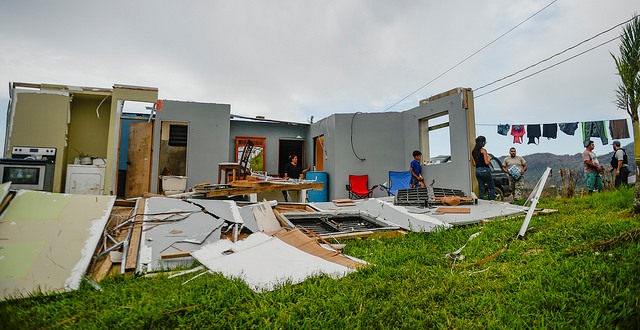
The post-apocalyptic scene in Puerto Rico after Hurricane Maria. Photo by U.S. Dept. of Agriculture licensed under the Creative Commons.

That’s our new reality. But in Washington, D.C., the Trump administration is hard at work, seeking to erase all evidence that the federal government acknowledges this new reality. The now inconveniently named Environmental Protection Agency has removed resources to address climate change from its web site. Last week it  canceled the speaking appearance of three agency scientists who were scheduled to discuss climate change at a conference on in Rhode Island. Perhaps most outrageous, it just released a draft of its four-year strategic plan that contains no mention of climate change or greenhouse gas emissions. The list of such inexcusable actions grows longer with every passing day as other federal agencies carry out similar purges.

And the world wonders if we have lost our minds. In late September I attended an international conference on “The U.S. and the World We Inhabit” in Milan, where I had been invited to deliver a keynote on climate activism in the U.S. The main theme of my talk was simple: don’t give up on us; there are lots of Americans pushing back against the effort to dismiss climate change as “fake news.” At one point, I remarked somewhat sarcastically that I doubted Italy had had to mount a “March for Science.” Amidst the laughter a hand went up. “Oh, but we did have a march,” the professor said. “It was for America.”

With this remark came a shared but unspoken understanding: the U.S. has relinquished leadership of the biggest and most important challenge of our time, the transition to a low-carbon economy. How did we get to this point? How is it that the U.S., which for decades led the world in scientific and technological achievement, has become an object of pity rather than a source of inspiration? It was both an embarrassing and infuriating moment, and it left me with plenty to ponder on the flight back home.

A Turning Point in the Climate Protection Fight?

The news about accelerating climate change continues to be grim. The most recent National Climate Assessment, issued in early May, underscored the extensive damage that climate change is already inflicting on various regions in the United States. John Holdren, the White House science advisor, called the report “the loudest and clearest alarm bell to date signalling the need to take urgent action to combat the threats to Americans from climate change.”

The news is not all bad, however. Three recent events since the report’s release raise the possibility that this time the alarm might actually be registering. The U.S Environmental Protection Agency (EPA) unveiled on June 2 its long-awaited plan to reduce greenhouse gas emissions from power plants. The EPA’s proposed Clean Power Plan would, if approved, direct states to develop a range of programs to cut carbon dioxide emissions from power plants by 30 percent from 2005 emissions levels by 2030.

The Dave Johnston coal-fired power plant in Wyoming.

The new rules mark the first time any U.S. president has moved to regulate carbon pollution from power plants, the largest single source of carbon dioxide emissions. Although arguably establishing goals that are too little and a deadline too late to prevent runaway climate change, the Obama administration sent a clear signal that it was finally willing to expend some significant political capital on the fight for climate protection.

Providing further hope that the proposed carbon regulations might mark a turning point, the U.S. Supreme Court on June 23 largely upheld the authority of the EPA to implement the proposed regulations, making it much more likely that the agency could fend off challenges from industry and conservative opponents.

The very next day a bipartisan group of senior political and business leaders, including three former secretaries of the Treasury, endorsed putting a price on carbon, warning that enormous deposits of oil and coal will have to be left in the ground to avoid reaching dangerous levels of global warming. In their report, “Risky Business,” the group outlined the economic impact of climate change, highlighting how climate change was becoming a serious financial issue for corporations.

In a New York Times op-ed launching the campaign for a carbon tax, former Treasury Secretary Henry Paulson contended that “we’re staring down a climate bubble that poses enormous risks to both our environment and economy.” Paulson, who served in the administration of George W. Bush, compared the mounting climate crisis to the financial crisis of 2008 and the collapse of the economy that followed.

Maybe, just maybe, the dam of political stalemate is beginning to break and the U.S. will finally adopt a coherent and effective climate and energy policy. You can be sure, however, that witout systematic and sustained pressure from the grass roots the necessary changes will never take place. That means that it’s up to us. But it’s certainly nice to see some of our political and business leaders finally lining up on our side.

Campus-Community Collaboration in the Age of Climate Distruption

Few institutions are better positioned to provide the leadership required to avoid runaway climate change than higher education. Indeed, it is hard to see where else the necessary leadership will come from if universities and colleges don’t step up to take on this responsibility. Not just any kind of leadership will do the trick, however. It must be collaborative, adopting an ethos of cooperation and mutuality rather than top-down hierarchical structuring.

0919_07_003-aerial-640x360

Cornell University

Universities and colleges in the United States historically have been crucibles of social change and laboratories for new ideas and creative solutions to some of society’s toughest problems. What is new is the scale of the problem and the threat it poses to human civilization. Simply providing models of sustainability on campus will not suffice. Universities and colleges can become truly sustainable only if they adopt the perspective of “ecosystem awareness” and work with the communities around them to become sustainable. They must commit to dramatically reducing the carbon footprint of campuses and become examples of ecological integrity, social justice and economic health. Beyond that, they must collaborate with the larger community and, in so doing, enable solutions to be scaled up and replicated.

As Michael Young, president of the University of Washington, argues, higher education must go beyond greening the campus. “For colleges and universities — especially public ones — engaging with our communities is fundamental to our mission,” he said. “We all have a responsibility to turn our universities inside out — that is, to take the wealth of ideas percolating on our campuses into our community, whether that community is across the street or across the globe.”

TCCPI seeks to lead the way

New York’s Tompkins County Climate Protection Initiative (TCCPI), at which I am a coordinator, was inspired in particular by similar efforts in Grand Rapids, Mich., and Oberlin, Ohio. It seeks to demonstrate what this kind of collaboration looks like and the impact it can have on a region’s economic, social and environmental health. With a population of about 100,000, Tompkins County includes three American College and University President Climate Commitment (ACUPCC) signatories (which also happen to be among the top employers in the county): Cornell University, Ithaca College and Tompkins Cortland Community College. In addition, the city of Ithaca, the towns of Ithaca, Caroline and Danby and the county all have made formal commitments to reduce greenhouse gas emissions, with the county calling for a decrease in emissions of 80 percent by 2050 and establishing an interim goal of 20 percent by 2020.

TCCPI has leveraged these climate action commitments to help mobilize a countywide energy efficiency effort, expand the production of renewable energy and accelerate the transition to a clean energy economy. The coalition, launched in June 2008, currently consists of local leaders from more than 40 organizations, institutions and businesses in the county, organized into five sectors: business, education, local government, nonprofit and youth. Each sector has a representative serving on the steering committee, which tracks the progress of the coalition’s projects and sets the agenda for the group’s monthly meetings.

The most immediate way in which TCCPI has adopted a collaborative model of leadership and sought to be a “leader-as-host” is to provide an ongoing forum where local leaders can come together regularly, share their progress and challenges and brainstorm collectively about ideas and solutions. In some cases, it’s hard to imagine how the outcomes resulting from these meetings would have emerged without years of building trust and thinking collaboratively. For example, the Tompkins County Planning Department and EcoVillage at Ithaca (EVI) never had worked together in the nearly two decades since EVI was founded. Yet, at a TCCPI meeting in June 2010, the group came up with the notion of the planning department and EVI’s joining hands to submit a proposal to the EPA Climate Showcase Community Grant Program, which seeks to highlight community efforts to decrease greenhouse gas emissions.

The grant proposal, submitted the next month, outlined a strategy for disseminating to the larger community the important lessons learned at EVI about shrinking one’s carbon footprint and developing ways that the county could incorporate these key principles into its planning for future development. EPA awarded a $375,000 grant and work began in February 2011. Two model developments, one at EVI and another at a pocket neighborhood downtown, already are underway, and the county has proposed a third development near the regional medical center. All are designed to highlight innovative approaches to “creating dense neighborhoods that enhance residents’ quality of life while using fewer resources.”

Another project growing out of TCCPI discussions is the installation of photovoltaic arrays at numerous sites in the county, including several county government buildings, businesses and higher education institutions. In the area of energy efficiency, TCCPI has worked with the Cornell Cooperative Extension of Tompkins County (CCETC) to support the establishment of the Tompkins County Energy Corps, made up of students from Cornell and Ithaca College who carry out informational energy audits for homeowners, share information with them about state and federal incentives and encourage concrete steps to improve their residences’ energy performance. TCCPI also has worked closely with CCETC in rolling out a countywide campaign, “Get Your Greenback Tompkins,” to raise awareness about the importance of energy savings.

In these latter two instances, TCCPI shared its own financial resources to help launch the projects. In other cases, it has lent its social capital to help projects obtain the necessary financial capital. Two original members of the TCCPI steering committee serve on the founding board of Black Oak Wind Farm, an 11.9 megawatt project just outside Ithaca slated to be in production by the summer of 2015.

The first community wind project in the region, Black Oak has raised its seed capital of $1.82 million from about 110 local investors. The TCCPI network provided a crucial resource in reaching out to many of these people and persuading them to invest in the wind farm and purchase power from it.

What’s next

TCCPI’s latest initiative marks perhaps its most important effort yet to be a “leader-as-host.” The coalition is working with downtown Ithaca property owners to form a 2030 District, a public/private partnership in which property owners and managers come together with local government, business and community leaders to provide a model for urban sustainability through collaboration, leveraged financing and shared resources. Across the country, 2030 Districts are being established to meet the energy, water and vehicle emissions targets called for by Architecture 2030 in the 2030 Challenge for Planning.

The bottom line? TCCPI embodies the next logical stage in the higher education sustainability movement. It not only promotes collaboration among the local higher education institutions, but also encourages engagement with the community at large in a democratic process. It seeks to draw together key stakeholders and engage them in a course of action that begins with discovering and making explicit common intention, and ends with collectively creating the kinds of innovation needed to effectively address intractable problems. With its emphasis on campuses and communities partnering to address climate and energy issues, TCCPI — like the Oberlin and Grand Rapids models it was based on — provides a framework for multi-sector collaboration that holds out hope of a brighter future for all. It demonstrates that job creation, energy security, more resilient communities and responsible stewardship of the environment are not mutually exclusive.

There is no silver bullet, no magic wand, which can make the immense problems confronting us go away. A necessary if not sufficient condition, though, is that we move from the old myths of independence and self-reliance and acknowledge the truths of interdependence and mutuality. In an increasingly secular world, universities and colleges are among the few institutions that have the capacity to promote this broader, long-term understanding of where the human experiment must head.

Note: This piece was orginally published by GreenBiz.com and can be found here.