Let’s Keep the Inflation Reduction Act Powering Upstate New York

The following was originally published in the Ithaca Times on April 20, 2025.

Upstate New York has always been a place where hard work and innovation go hand in hand, going back to the building of the Erie Canal. Now, thanks to the Inflation Reduction Act (IRA), our region is seeing a surge in clean energy investments that are creating jobs, lowering energy costs, and strengthening local economies.

The IRA Drives Economic Benefits

We can see firsthand how federal policies like the Inflation Reduction Act (IRA) are driving tangible benefits for our communities.Ithaca’s groundbreaking plan to decarbonize the city’s buildings, for example, is tapping into federal incentives to make the transition affordable and sustainable.
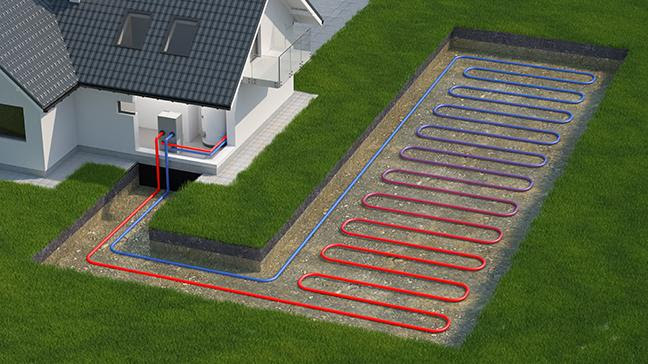
Meanwhile, the IRA’s Rural Energy for America program is helping farms and small businesses across the Southern Tier invest in energy efficiency upgrades and clean energy projects for affordable energy they can generate on their own land.

Key to Private Investment Growth

Throughout our region and the nation, clean energy projects are delivering economic growth and hundreds of new jobs. Since the passage of the IRA, the U.S. has added more than 400,000 new clean energy jobs and seen over $422 billion in private investment. And in New York alone, federal clean energy tax credits have driven $115.47 billion in investments and created nearly 29,000 jobs since they were passed. Here in our region, the impact is clear: new, good-paying jobs in manufacturing, more reliable, locally-produced clean energy, and strengthened economic opportunities in both urban and rural communities. Despite this momentum, some in Washington want to roll back these critical investments. Repealing clean energy tax credits would mean turning away billions in future investment, increasing energy costs for businesses and families, and slowing the progress we have worked so hard to achieve.

That’s why we need Rep. Josh Riley, Rep. Nick Langworthy, and Rep. Claudia Tenney to stand up for Upstate New York and protect the Inflation Reduction Act. Our region is already seeing the benefits, and by maintaining this momentum, we can build a future that is both economically and environmentally resilient. Now is the time to double down on our progress, like the early canal builders, not turn back.

The Acceleration in Global Renewables

The latest report from the climate front is a doozy. According to a new study, the global warming that has already occurred will cause a sea level rise of more than 10 inches from the melting of the Greenland ice sheet alone. That much is baked in. How much worse can it get? “With continued carbon emissions, the melting of other ice caps and thermal expansion of the ocean,” the Guardian warns, “a multi-metre sea-level rise appears likely.”

Obviously, this is very bad news for the nearly 600 million people who live in coastal zones worldwide.

Aftermath of flooding in Pakistan.

It comes on top of record-breaking heat waves in China and South Asia, the worst drought in Europe in 500 years, the continuing megadrought in the U.S. Southwest, massive wildfires in Spain, Italy, Portugal, Greece, France, and Germany, and catastrophic floods in Pakistan and Afghanistan.

Evidence of a climate emergency could hardly be clearer. In Bill McKibben’s words, “We live on a different planet than we used to.”

Fortunately, there are solutions at hand that don’t require bleeding edge technologies. They do, however, require political will to implement, and that’s why the passage of the Inflation Reduction Act (IRA) is so important.

Clearly, the IRA doesn’t approach the scale demanded by the current climate crisis, but it sets the ball in motion, creating a dynamic that could very well generate its own momentum. Finally, after years of inaction, the federal government has exerted powerful leadership to deal with a rapidly warming world.

Signed into law by President Biden earlier this month, the IRA commits $369 billion to carrying out climate and clean energy measures, by far the largest such investment in U.S. history. Adopting a carrots rather than stick approach, it represents a major change in policy direction. Instead of calling for carbon taxes to discourage fossil fuel use, it focuses on incentives to spur investments in renewables and energy efficiency, mainly in form of tax credits.

The IRA is far more modest than the Build Back Better Act and it includes significant concessions to the fossil fuel industry. Even so it’s projected to cut U.S. emissions by 40% by 2030, compared with 2005 levels. Economists, furthermore, estimate that Americans will save as much as $200 billion over the next decade on electricity bills thanks to the new law, challenging the belief that the energy transition will mean higher prices.

Perhaps the best thing about the IRA is the fact that it comes right as the adoption of renewables has picked up dramatic speed. As David Wallace-Wells observes, the public investment will benefit from “much broader tailwinds” than just a few years ago. For example, the amount of electricity generated by renewable resources in the U.S., which was only 8.6% in April 2001, hit a record 28% this April.

In fact, wind and solar installations have made up an impressive majority of new power plants added to the national grid in recent years. In the first six months of 2022 wind and solar accounted for two-thirds of the new U.S. electrical generating capacity. The country’s investments in clean energy have grown from $10 billion in 2004 to $105 billion in 2021.

Globally, the picture is similarly positive; renewable energy production has increased 400% in the past decade. The renewable investment of $226 billion worldwide in the first half of 2022 set a new record, jumping 11% in the first six months relative to same period in 2021. Investment in solar was up 33% and 16% in wind. Renewables are now the cheapest form of power in many countries, including the U.S.

So, yes, the sea level is rising and that’s scary. But the shift to renewables is accelerating and that’s exciting. There’s little question that climate chaos is causing great damage and will continue to do so. If we work hard to push the energy transition forward, however, we can limit this destruction and bequeath a better world to the generations that follow us.