NY State Energy and Climate Policy in 2025

It’s an understatement to say that 2025 was not a good year for renewable energy and climate change policy in New York. The state experienced significant policy uncertainty this past year in these two areas, to put it kindly.

Certainly, New York continued to invest in renewable energy infrastructure and climate adaptation strategies. The execution in May of 26 large-scale land-based renewable energy contracts that will generate more than 2.5 GW of clean capacity, underscored the Hochul administration’s ongoing commitment to renewable energy deployment.
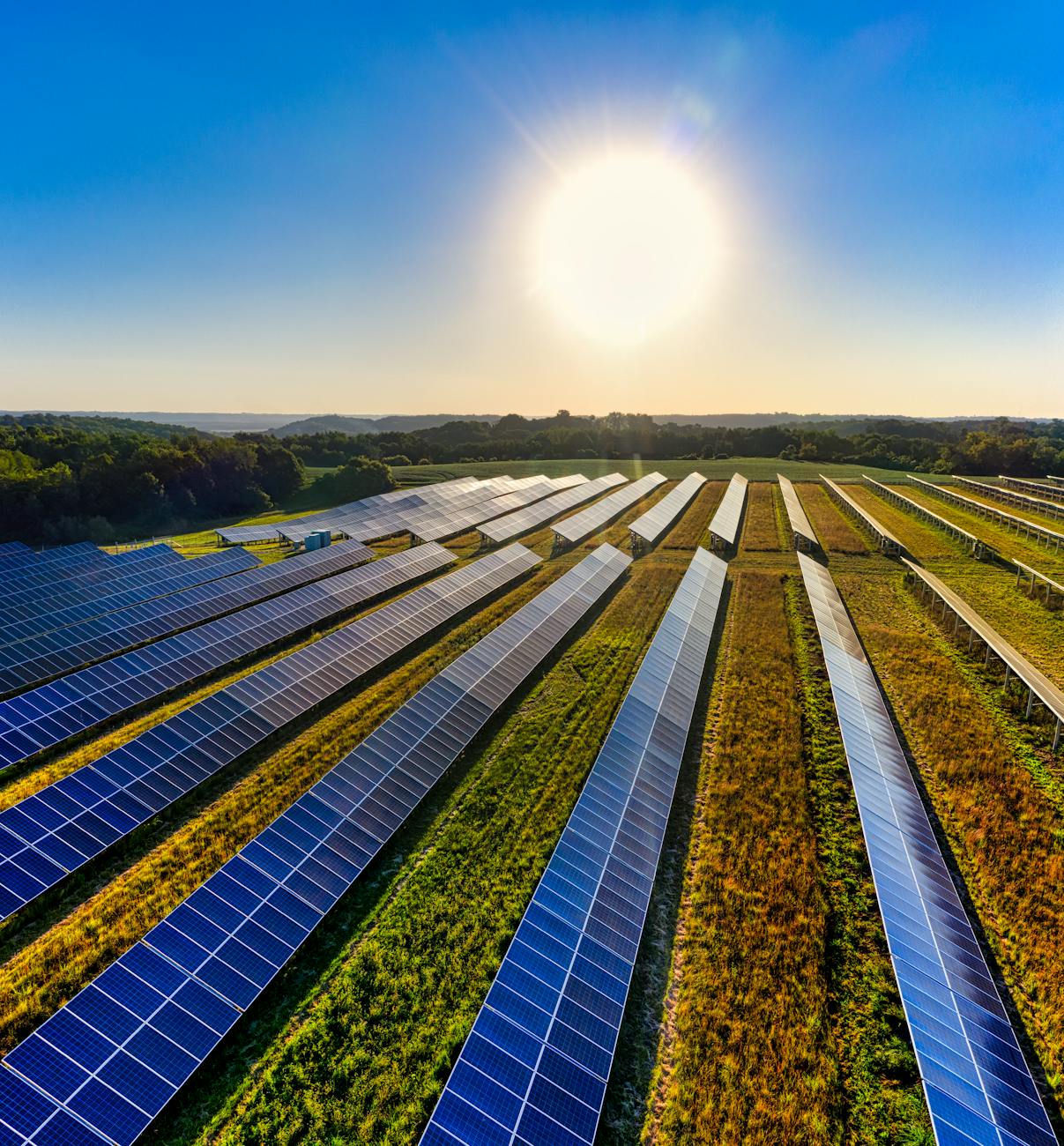
Photo by Tom Fisk on Pexels.com

In addition, the state has backed major green initiatives such as a broader Sustainable Future Program that allocates $1 billion to expand energy efficiency, decarbonization of buildings, and thermal energy networks, investments intended to reduce emissions while making the energy transition more affordable.

Yet these achievements were overshadowed in 2025 by growing concerns about policy direction and ambition.

The Hochul Administration Pullback

The Hochul administration faced strong criticism in 2025 from climate advocates for its pullback in the implementing climate policy. The state’s contentious handling of the proposed Cap-and-Invest program — an economywide carbon pricing system designed to generate revenue for climate initiatives while creating enforceable emissions caps — attracted much of this criticism. Although the program was expected to be finalized in 2025, Gov. Hochul spent much of the year putting in roadblocks that hindered its implementation.

Delays and administrative resistance in rolling out greenhouse gas emission regulations required by the CLCPA, including sections of the cap-and-invest framework, has generated much consternation. State agency decisions such as allowing previously denied permits for natural gas infrastructure have signaled a shift toward accommodating traditional energy interests at the expense of stricter climate enforcement. This will undoubtedly slow progress toward legally mandated emissions targets.

The administration has justified such a cautious approach as necessary to balance climate ambition with affordability, a framing that weighs public concerns over energy costs against the urgency of decarbonization. Nonetheless, environmental groups argue that these pullbacks risk New York falling short of statutory reductions and undermine the leadership role the state had positioned for itself. Critics also contend that reduced emphasis on building public renewables may forgo lower-cost clean energy and job opportunities.

Trump’s Energy and Climate Actions

Federal policy further complicated New York’s energy and climate trajectory in 2025. During President Trump’s second term, there has been a pronounced rollback of federal climate policies and a rush toward fossil fuel development. Key actions include withdrawal from the Paris Agreement, deregulatory measures at the Environmental Protection Agency (EPA) to dismantle numerous environmental protections, and administrative opposition to renewable energy projects.

Most consequential for New York has been federal interference with offshore wind development. Earlier this month, the Trump administration paused leases for multiple East Coast offshore wind farms, including Empire Wind and Sunrise Wind, citing national security concerns, a move that directly threatened New York’s offshore wind ambitions.

Other federal actions such as the elimination of clean energy tax incentives and cancellation of billions in funding for clean energy projects undermined the economic viability of deploying renewables at scale, particularly in states like New York that count on these incentives to attract investment. Alongside rollbacks of vehicle emission standards and other emissions safeguards, these federal shifts have seriously constrained the state’s ability to achieve its climate goals, creating regulatory conflict between state and federal priorities.

Repercussions for the City of Ithaca

All of these developments in 2025 have had significant repercussions for the City of Ithaca and its pursuit of ambitious climate objectives, including transitioning municipal operations to carbon neutrality, promoting electrification of buildings, and expanding local renewable generation.

State-level uncertainties have had tangible consequences for Ithaca’s energy planning. Delays or weakening of statewide carbon pricing mechanisms and the cap-and-invest program have reduced predictable funding streams that cities could use to support local renewable projects, efficiency upgrades, and climate resilience measures. Furthermore, the state’s delay in the implementation of the All-Electric Buildings Act has led to a delay in the city’s implementation of its net-zero building code.

Federal setbacks in wind and clean energy incentives also make capitalizing on larger-scale renewables more challenging, potentially delaying projects that could benefit local businesses and residents.

The combined effect of state policy reticence and federal rollbacks necessitates that Ithaca double down on local planning, community engagement, and the tapping of non-federal funding sources to meet its climate objectives. As a result, to say the least, this coming year will be challenging.


A Tale of Competing Tipping Points

We occupy a peculiar moment in history. On the one hand, the climate teeters on the edge of catastrophic destabilization. It’s become clear that we’re not on track to stay under 1.5 degrees Celsius, the point at which scientists consider runaway climate change to become highly likely, and even 2 degrees might be slipping out of our reach.

Other worrisome trends abound. There is increasing evidence that the West Antarctic ice sheets are heading towards irreversible melting. The Gulf Stream is slowing down noticeably, in part due to the melting of the Greenland ice sheet, a development that will have a profound impact on the weather systems and sea levels on both sides of the Atlantic. As a result of hotter and drier weather and deforestation in the Amazon, one of the planet’s most important carbon sinks is disappearing as the rain forest transitions into a savannah.

President Biden kicks off the Virtual Leaders Summit on Climate on April 22, 2021. White House photo by Adam Schultz/Public Domain.

These are only three of the seven climate tipping points that scientists have identified as posing the greatest threats. They constitute key elements of an earth system in which reinforcing loops, known as positive feedbacks, could send the world into an entirely different state. Seemingly small planetary changes, we’re beginning to grasp, can rapidly snowball into very big ones.

These climate tipping points have occurred before. There is compelling evidence of such abrupt shifts in the paleoclimate record. For example, sudden warming episodes during the last glacial period caused temperature changes of several degrees Celsius over short time spans in large parts of the North Atlantic Ocean.

Faced with the gravity of the current climate situation, it’s difficult not to be overcome by a growing sense of despair and even resignation. All around us signs of a dangerous, unfamiliar world are emerging: megadroughts, wildfires, rising sea levels, extreme weather events unprecedented in their scale and frequency. As Alex Steffens observes, “To look at this moment clearly is to see that the planetary crisis isn’t an issue, it’s an era.” It’s no longer a question, in other words, of saving the earth for our grandchildren; the alarming, alien world set in motion by global warming has already showed up on our doorstep.

The question is, what are we going to do about it? Both climate denialism and climate doomism are morally unacceptable options. There is another pathway. Juxtaposed against the array of runaway climate tipping points is what Gabbi Mocatta and Rebecca Harris call “a tipping point for climate action.” It’s the extraordinary tension between the tipping points for climate destabilization and collective action that makes the present moment so fraught. The probability of catastrophe versus the possibility of hope: which will win out in the end? Will the tipping point for broad-based climate action take place before the climate tipping points? The stakes have never been higher.

The case for hope rests, oddly enough, on the fact that we know more about the science of climate change than ever before. As Mocatta and Harris put it, “Although much of [this science] is devastating, it’s also resoundingly clear.” The incontrovertible nature of the climate data means that policy makers have a stronger obligation than ever before to act on its findings. The reentry of the U.S. into the Paris Agreement and the announcement at the recent White House virtual summit that the nation is committed to reducing its greenhouse gas emissions by 50%-52% below its 2005 emissions levels by 2030 are just two indications that policy makers understand the need to respond to the latest research.

At the same time, public support for action has grown dramatically. The largest global opinion survey on climate change ever conducted, The People’s Climate Vote, found that even in the midst of the 2020 pandemic 64% of people considered climate change to be “a global emergency.” Of the people who viewed climate change in this light, 59% said that “the world should do everything necessary and urgently in response.”

The sense of peril reflected in this survey is perhaps the best news of all. It suggests that we may be ready to abandon the “business as usual” approach and move beyond the gradualism that has characterized much of climate policy action up to now. It raises the possibility that we can finally engage in the debate that truly matters: how do we transform our way of life for the benefit of all to meet the existential challenge before us? “Urgency and agency,” as Michael Mann reminds us, “make a winning combination in our fight against climate change.”

COP24, Wishful Thinking, and the U.S.

When the UN climate talks at COP24 opened in Katowice, Poland earlier this month, there was good reason to be concerned about the outcome. After much infighting, however, delegates at the last minute settled on most of the rules for putting the 2015 Paris agreement into practice. The new pact outlined how countries will provide information about their climate actions, including mitigation and adaptation measures, as well as steps to provide financial support for climate action in developing countries.

“The guidelines will promote trust among nations that all countries are playing their part in addressing the challenge of climate change,” declared the official UN statement issued at the conclusion of the gathering. One could be forgiven, however, for believing this press release reflected wishful thinking more than actual reality.

COP 24 opening plenary. Photo by UNclimatechange licensed under CC BY-NC-SA 2.0.

The agreement, for example, called on countries to step up their plans to cut emissions ahead of another round of talks in 2020. But the key question of how countries will bolster their targets on cutting emissions was largely overlooked.

Current targets, agreed to in the wake of the Paris climate talks in 2015, put the world on course for 3C of warming from pre-industrial levels, which scientists say would be disastrous, resulting in droughts, floods, rising sea levels, and a sharp reduction in agricultural productivity.

Perhaps the most disturbing aspect of COP24 was the obstructionist role played by the US. While the country provided important leadership in securing the Paris climate agreement, it proved to be far less constructive in Katowice. Throughout the negotiations the US delegation sought to water down language. Siding with the oil and gas nations of Russia, Saudi Arabia, and Kuwait, it blocked the conference from “welcoming” the IPCC report on the impacts of a temperature rise of 1.5C.

Just as infuriating, the US held an event at the conference promoting the continued use of coal, natural gas, and other fossil fuels. In contrast, the European Union and several other developed countries joined with dozens of developing nations in declaring they would focus on preventing a 1.5C rise in their carbon-cutting efforts.

At this point in the climate crisis, it should be clear that there are only two ways to move forward. One is to implement clean energy technology on the scale of the Manhattan Project or the Apollo Program and stop the burning of fossil fuels. The other is to accept that billions of people will suffer and die because we refuse to take this course.

Which path will our community adopt? This is the question we should be asking ourselves at every turn, whether it is expanding the North Campus at Cornell, developing the Green Street Garage Project, repowering Cayuga Power Plant, or implementing a new Green Building Policy for the City and Town of Ithaca. We can criticize the lack of commitment and refusal of the US to address the pressing issues of climate change at global summits, but can we let ourselves off the hook? Clearly, we need to set a new course and act with a greater sense of urgency. As Greta Thunberg, the 15-year-old Swedish climate activist, told the COP24 delegates, “we are facing an existential threat and there is no time to continue down this road of madness.”