TCCPI at Fifteen

It’s hard to believe, but this summer marks the 15th anniversary of the Tompkins County Climate Protection Initiative. At the time of TCCPI’s launch in June 2008 I was working on a book with a colleague at Second Nature, a nonprofit think tank in Boston dedicated to promoting the higher education sustainability movement. One of the key themes in the book, Boldly Sustainable: Hope and Opportunity for Higher Education in the Age of Climate Change (2009) was the need for greater collaboration between colleges and universities and the communities in which they operated.

I was drafting a chapter for the book in early 2008 on sustainability, economic development, and community partnerships, exploring several case studies across the U.S., including Ithaca. I had stepped down the previous year from the provost’s office at Ithaca College, where I had helped lead what became a nationally recognized sustainability initiative, to join Second Nature as a senior fellow. Having left the academic world following a quarter century as a faculty member and administrator, I became much more aware of the disconnect between campuses and communities in the emerging sustainability movement. 

Time for Collaboration

Looking over the Ithaca landscape, it seemed to me that the time was right for an effort that would bring together higher education institutions, local governments, nonprofits, and businesses around the need for climate action and the energy transition. I brought the idea to the Park Foundation and submitted a grant proposal for what became TCCPI; the foundation generously funded the proposal and has continued to do so with unstinting support.

In that time, TCCPI has held about 165 monthly meetings, published 76 newsletters, and issued 14 annual reports of member accomplishments regarding climate action, clean energy, and sustainability. In 2016, as part of an effort to strengthen our engagement with the private sector, we established (with the assistance of a grant from NYSERDA) the Ithaca 2030 District, part of what is now a network of 24 urban districts in the U.S. and Canada dedicated to improving the energy and water performance of commercial buildings in downtown areas. 

From an initial base of 15 buildings, the Ithaca 2030 District has grown to 44 buildings with 584,381 square feet of committed space. Besides our quarterly meetings and newsletters, we provide each property member with an interactive, online dashboard that measures the energy and water performance of their individual buildings. These dashboards are regularly updated so that owners, managers, and tenants can monitor their progress. You can find our latest annual district-level report here.

Policy Advocacy

Apart from the founding of the Ithaca 2030 District, perhaps the most significant change in TCCPI since its beginning is the extent to which we have become involved over the last few years in policy advocacy. Our activities in this area are primarily focused on the state level, and we are members of three statewide activist coalitions: NY Renews, Renewable Heat Now, and Climate Can’t Wait. The passage of the Climate Leadership and Community Protection Act in 2019 and the subsequent establishment of the Climate Action Council, which released its recommendations for a state climate plan this past December, as well as the flurry of bills sparked by these recommendations, have constituted the main catalyst for this evolution in TCCPI’s work. At the local level, we have been a strong and active supporter of the Ithaca Green New Deal.

Underlying this new attention on policy advocacy is a mounting sense of urgency as the climate crisis becomes an undeniable reality of our present, one that has had a disproportionate impact on marginalized groups and which demands that we place equity and justice at the center of our efforts. In the face of this growing awareness and public support for action, however, the fossil fuel industry and its allies have responded with misinformation, fear mongering, and a deep-seated commitment to maintaining the status quo.

In the process, it’s become clear that the most effective way to push back and secure a safe, just, and healthy future is collective action by well-organized citizens fighting for our communities and making sure no one is left behind. Animated by this spirit, TCCPI will keep moving forward in the years to come. As Thomas Berry writes in The Great Work: Our Way into the Future, unless we devote ourselves to preserve and enhance the life, beauty, and diversity of the planet for the generations to come, we will become “impoverished in all that makes us human.”

Ithaca 2030 District Annual Report for 2022

The Ithaca 2030 District recently released its fourth annual progress report.  As the report shows, the District as a whole in 2022 reduced its energy consumption by 27% from the baseline and realized a savings of 40% in water useThus, at the end of last year, we were over three-quarters of the way toward the 2025 energy goal and 80% of the way towards the 2030 water target.

The latest greenhouse gas inventory showed that buildings in the city make up an estimated 58% of emissions in Ithaca, with the commercial sector contributing 38%. Clearly, achieving the city-wide goal of carbon neutrality by 2030 depends in great measure on dramatically reducing the carbon footprint of our buildings.

The Ithaca 2030 District—the flagship program of the Tompkins County Climate Protection Initiative (TCCPI)—is a voluntary effort by property owners and tenants to improve the energy and water performance of their buildings as well as to bring about cuts in commuter transportation emissions.

The District continues to experience considerable growth. Currently, there are 44 member buildings and 584,381 square feet of committed space, compared to 33 buildings and 417,089 square feet in 2021. That’s a 40% increase in committed square footage. For the purposes of this annual report, we focus on the 30 property members, 41 buildings, and 532,097 square feet that belonged to the District at the end of 2022.

Commuter emissions remained an area of concern in 2022. There was, however, an improvement: they dropped from 1706 kg CO2e/commuter/year in 2021 to 1421, a 16% reduction and significantly below the pre-pandemic level of 1,603. We still remain above the 2020 target of 1200, but at least now we’re headed in the right direction.

Besides the annual district-level report, each of the property members is provided access to a confidential interactive, dynamic dashboard that measures the energy and water performance of their individual buildings. These dashboards are regularly updated so that building owners and tenants can monitor their progress towards the individual 2030 energy and water targets.

Check out the full 2022 report for details about the progress and growth of the Ithaca 2030 District.

Tompkins County Works to Reduce GHG Emissions

This piece originally appeared in the August 10th issue of the Tompkins Weekly.

A coalition of activist leaders and concerned citizens, TCCPI meets monthly to discuss and share information about what we can do locally to shrink our carbon footprint and help the community meet its ambitious climate goals. The new report includes 36 submissions and covers a wide range of inspiring activities that reflect the commitment and engagement of hundreds of individuals working together locally to better our world.

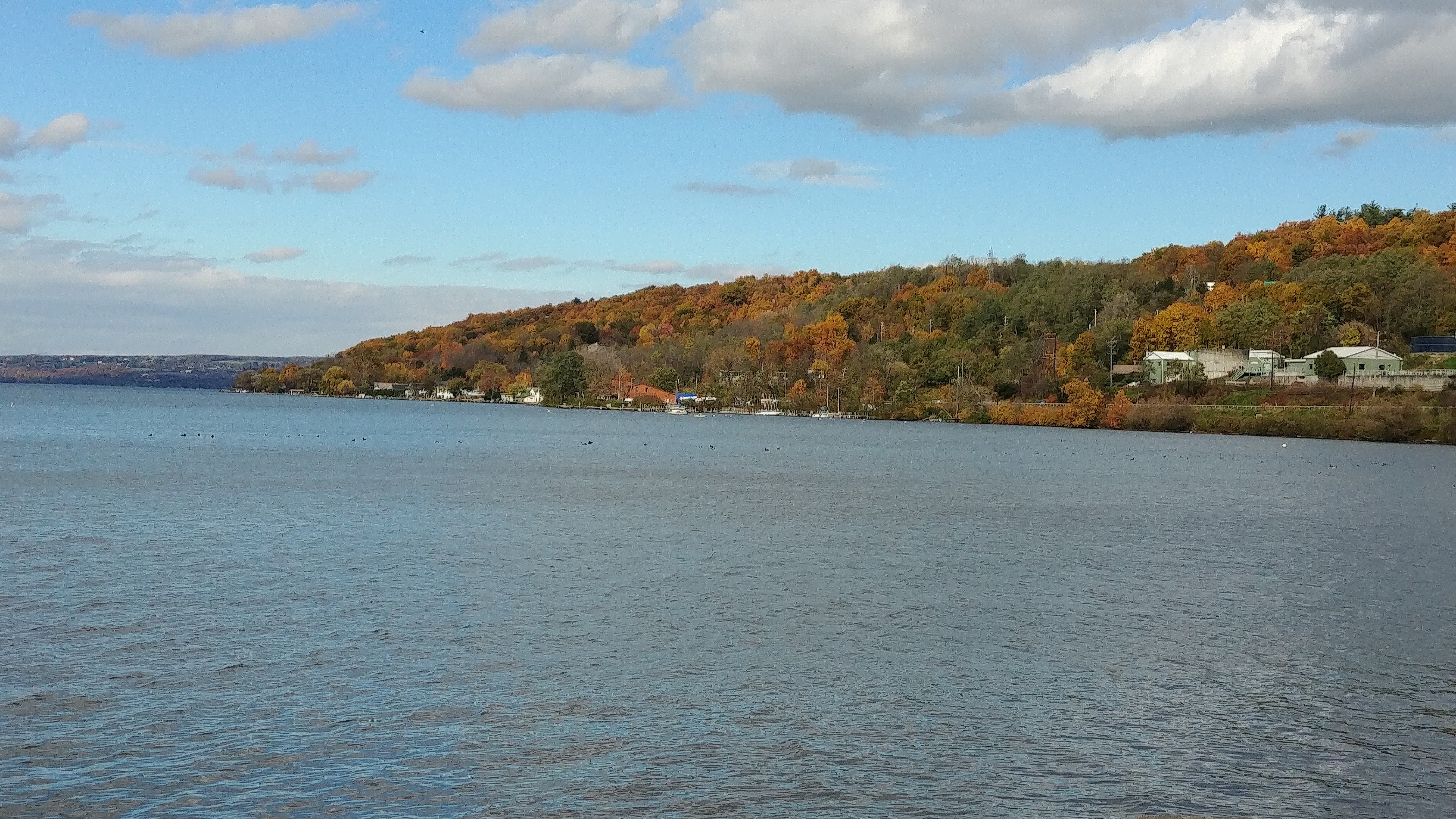
A view of Cayuga Lake. Environmental efforts across Tompkins County help protect this crucial natural resource.

Below is just a small sample of what the report covers. The full, text-only version can be found at tccpi.org/tccpi-2021.html. If you’d like a free PDF copy of the illustrated 37-page report, contact us at info@tccpi.org.

The biggest news of 2021 was the Ithaca Common Council’s vote in November to begin decarbonization of the city’s 6,000 buildings (tinyurl.com/26y8exs5). Under the leadership of Luis Aguirre-Torres, who came on board in March as the city’s sustainability director, the plan secured $105 million in private investment to carry out energy efficiency retrofits and install heat pumps.

The initiative followed the adoption in June of the Ithaca Energy Code Supplement requiring net-zero construction for new buildings by 2026. The city also launched a process to implement all-renewable community choice aggregation for residents and proposed a 25-acre solar array in the southwest area of the city.

Other municipalities took important steps to facilitate the transition to clean energy. Tompkins County developed a Green Facilities Plan (tinyurl.com/ycglol6a) to improve energy efficiency of its buildings, and the Legislature approved a $7 million bond to kick off phase one of the plan.

The Town of Ithaca also adopted the Energy Code Supplement and joined with the city to develop a community choice aggregation program. The towns of Ithaca, Caroline, and Dryden conducted clean heating programs in partnership with HeatSmart Tompkins, resulting in grant funding and numerous heat pump installations.

Dryden adopted the NYS Stretch Code to require higher energy efficiency in new construction and, along with the town of Ithaca, continued to install LED streetlights.

The highlight of 2021 in the transportation sector took place on Earth Day when Tompkins Consolidated Area Transit (TCAT) unveiled its first-ever fleet of electric buses. The Center for Community Transportation (CCT), Cornell Cooperative Extension of Tompkins County (CCE-Tompkins), and Downtown Ithaca Alliance (DIA) carried out key efforts to reduce greenhouse gas emissions.

CCT’s Ithaca Carshare, Bike Walk Tompkins (and its signature program Streets Alive! Ithaca) and Backup Ride Home all continued to play vital roles in promoting alternatives to car ownership and single-occupancy commuting, as did CCE-Tompkins’ Way2Go and DIA’s GO Ithaca.

CTC and CCE-Tompkins also collaborated on identifying and addressing barriers to the wider adoption of electric vehicles (EVs) among underserved populations. In addition, TCAT, Ithaca Carshare, and CCE-Tompkins partnered on several events offering opportunities to see EVs and speak with EV owners. Both Tompkins County and Ithaca Carshare added several EVs to their fleets, and the city explored ways to electrify its fleet and deploy a shared electric bike program.

Recycling, reuse and waste management also saw significant new developments in 2021. Finger Lakes ReUse made perhaps the biggest splash with its opening of the ReUse MegaCenter at Triphammer Marketplace. The new location, with a half-acre of retail space, is now one of the largest reuse business locations in upstate New York.

In all, Finger Lakes ReUse diverted an estimated 1,023 tons of materials through its three locations, including furniture, building materials, housewares, electronics, books, textiles, appliances, and more.

Cornell University has reduced campus waste by one-third in the last five years, and reuse and reclamation doubled in the last year.

Twelve restaurants and eateries on The Commons support Zero Waste Tompkins’ Ithaca Reduces program by asking customers to bring their own containers and cups. Furthermore, downtown Ithaca has about a dozen independent, locally owned stores that specialize in reuse and recycled products.

Education and advocacy were crucial components of the climate protection effort in 2021. Cornell and CCE-Tompkins, in particular, played major parts on the education front. Thanks to the ongoing integration of sustainability into campus learning and research, 100% of Cornell students now graduate with sustainability learning outcomes, beginning with a requirement that all incoming students complete a sustainability assessment and learning module.

Over 40 living laboratory projects take place each year using the campus as an innovation hub for sustainability solutions. Students can major, minor or concentrate in 87 programs focused on sustainability. Nearly all academic departments are currently undertaking sustainability-focused research, including 619 faculty fellows associated with the Cornell Atkinson Center for Sustainability.

These and other achievements earned the university a third consecutive Platinum rating in 2022 from STARS, the international gold standard for assessing campus sustainability work.

At CCE-Tompkins, the Energy and Climate Change team worked with city staff and other key community stakeholders to explore strategies for community education and outreach around the Ithaca Green New Deal (IGND). The city sustainability office and CCE-Tompkins joined with the training program Roots of Success to begin development of a regional workforce training ecosystem.

In addition, CCE-Tompkins staff created resources for CCE educators across the state on large-scale solar development and reducing energy use. Get Your GreenBack, which became part of CCE-Tompkins in late 2021, saw its volunteer Energy Navigator program expand dramatically with a NYSERDA grant to revise its curriculum and take its operation statewide.

The tiny home PowerHouse proved to be a big hit, demonstrating at outreach events and school programs how to reduce energy use and transition to renewable energy. Together with HeatSmart Tompkins and Sustainable Finger Lakes (formerly Sustainable Tompkins), these efforts helped to increase the adoption of home energy retrofits and heat pumps.

PRI/Museum of the Earth, the Sciencenter, New Roots Charter School, the Ithaca 2030 District, TCCPI and the Tompkins County Environmental Management Council carried out other important educational work regarding climate, energy and sustainability in 2021.

Advocacy activities took on an increasing sense of urgency as climate change accelerated in 2021. The local chapters of Citizens Climate Lobby and Climate Reality Project worked to raise awareness about federal legislation such as the carbon dividend bill and the state’s Climate Leadership and Community Protection Act, which in 2019 established aggressive climate targets.

Fossil Free Tompkins (FFT) and HeatSmart Tompkins actively participated in the statewide Renewable Heat Now coalition, which scored important victories in the recent legislative session, including passage of a moratorium on the use of fossil fuel plants for cryptocurrency mining.

FFT and other local environmentalist organizations campaigned to ensure that Greenidge Power Plant did not get its air permit renewed, and these groups also supported the successful purchase by Finger Lakes Land Trust of NYSEG’s Bell Station property. Sunrise Ithaca held events throughout 2021, including a Green Building Policy Town Hall, several climate rallies and a community forum on the implementation of the IGND.

At the heart of all this outstanding work, as always, was the Park Foundation. Without its generous, ongoing financial support and guidance, many if not most of the activities captured in the TCCPI report would not have occurred. The community owes a debt of gratitude to the foundation and its extraordinary record of civic betterment.


Growth & Progress in the Ithaca 2030 District

The Ithaca 2030 District recently released its third annual progress report. As the report shows, the Ithaca 2030 District in 2021 once again surpassed the 2020 reduction target for energy and, for the first time, went beyond the 2030 target for water.

Buildings make up 73% of the greenhouse gas emissions in the City of Ithaca, with commercial buildings accounting for 48 percent, so achieving the city-wide goal of carbon neutrality by 2030 depends in great measure on dramatically reducing the carbon footprint of our buildings.

The flagship program of TCCPI, the Ithaca 2030 District is a voluntary effort by property owners and tenants to improve the energy and water performance of their buildings as well as to bring about cuts in commuter transportation emissions.

District property members, by committing to the goals of the 2030 District, are not only having a positive effect on the environment; they are also saving money on utility costs, improving the well-being of those who live and work in their buildings, and stimulating the local economy.

The Ithaca 2030 District has grown considerably in the last 16 months, due in part to the reopening of downtown as well as the excitement generated by the City’s building decarbonization campaign.

Currently, there are 30 commercial property owners, 40 buildings, and 522,375 square feet of committed space, compared to 25 property members, 29 buildings, and 375,371 square feet at the end of 2020. This annual report focused on the 27 property members, 33 buildings, and 417,089 square feet that belonged to the District for most of 2021.

The District reduced its energy consumption by 21.8% from the baseline. In addition, it realized savings of 51.4% in water use. The one area where the District lost ground was commuter transportation emissions. The increase in driving to work in 2021 as downtown reopened, along with a decline in the number of remote workers, resulted in a rise in transportation emissions to a level well above the 2020 target, even exceeding the level of emissions generated before the onset of the pandemic in 2020. Clearly, commuter emissions will be a major area of concern as the City of Ithaca works to achieve its goal of community-wide carbon neutrality by 2030.

Besides the annual district-level report, each of the property members is provided access to a confidential interactive, online dashboard that measures the energy and water performance of their individual buildings. These dashboards are regularly updated so that building owners and tenants can monitor their progress towards the individual 2025 and 2030 energy and water targets.

Check out the full 2021 report for details about the growth and progress of the Ithaca 2030 District.

An Inflection Point in the Climate Fight?

The weather in Tompkins County has been beautiful this June. Spring got off to a slow start in April, with one rainy, gray day following another and temperatures at night dipping into the 30s even at the end of May. But then June arrived and with it so did the warmer and sunnier days. Gardens are exploding with new growth, the fields and roadside ditches are full of wild flowers and the landscape is green and lush.


We have every reason to be grateful. But in much of the world the climate emergency continues unabated. Just a few of the noteworthy items in the news recently:
  • Record-shattering heat assailed Europe this past week, with temperatures hitting well above 100 degrees F in France, Germany, Poland, and Spain. In fact, Europe’s five hottest summers in the past 500 years have all occurred in the last 15 years.
  • The wave of scorching weather has been even worse in India, where hundreds of villages have been abandoned because of acute water shortages and crop failures. The temperature in the city of Churu, hit 123 degrees, “making it the hottest place on the planet,” according to the Guardian. Several of India’s biggest cities are on the verge of running out of water.
  • In the Canadian Arctic permafrost is thawing 70 years sooner than scientists predicted. “What we saw was amazing,” Vladimir Romanovsky, a professor of geophysics at the University of Alaska Fairbanks said. “It’s an indication that the climate is now warmer than at any time in the last 5,000 or more years.”
  • A new United Nations report warned of “climate apartheid,” asserting that human rights, democracy, and the rule of law were all increasingly at risk. The report observed that developing countries will bear 75% of climate crisis costs, despite the poorest half of the world’s population causing just 10% of carbon dioxide emissions.
  • In the face of this mounting evidence of runaway climate change, the U.S. refused to join nineteen other nations this week at the G20 Summit in Japan in a reaffirmation of their commitment to implementing the Paris Treaty. The U.S. objected on the grounds that doing so would hurt American workers and taxpayers.
As the 2018 achievements of Tompkins County Climate Protection Initiative (TCCPI) coalition members show, our community has pursued a wide range of activities to tackle the challenge of reducing greenhouse gas emissions. The unanimous approval by the City Common Council of Mayor Svante Myrick’s Green New Deal for Ithaca is another dramatic indication of the local commitment to battle the climate crisis, marking a potential inflection point. But clearly there is much work to be done and, as the onrush of global developments starkly reminds us, there is little time to waste. If we are to bend the curve of history in the right direction and avoid catastrophe, we must redouble our efforts and push onward, refusing to rest on our laurels.

The Art of Creative Problem Solving

There are few problems more intractable and complicated than climate destabilization. The interaction between the myriad parts of the climate regime, the various feedback loops and the uncertainties that make it so difficult to predict what lies ahead, can seem overwhelming.

But, fortunately, there has been a tremendous unleashing of creative energy aimed at tackling this existential threat. It is this creativity — the seemingly unlimited capacity of humans to take on the most complex challenges — that is the source of our greatest hope.

One of the toughest areas to address lies at the intersection of environmental stewardship and social equity, especially at a time when the degree of inequality in American society has reached levels not seen since the early twentieth century. It was a special honor, in this context, to hear about a new NYSERDA initiative at last month’s TCCPI meeting to develop affordable, net-zero modular homes targeted to provide low-income families with a way to dramatically reduce their carbon footprint.

An example of an affordable net zero modular home. Photo courtesy of VEIC.

Working with the Vermont Energy Investment Corporation (VEIC), NYSERDA will be spending $230 million over the next three years as it rolls out this new campaign. VEIC is a thirty-year-old nonprofit based in Burlington that is the first of the public-service ESCOs in the U.S. It has, in particular, focused on ways to provide low and moderate income families with ways to increase the energy efficiency of their homes and, in the process, provide significant cost savings for these families.

Currently, 8 million individuals live in manufactured homes in the U.S. These homes typically consume twice the energy of site-built homes. Following Tropical Storm Irene, which destroyed hundreds of mobile homes in Vermont and New York in August 2011, the call went out to replace mobile homes with modular construction.

The new net zero modular homes are equipped with solar PV systems and super efficient technology, including LED lighting, EnergyStar appliances, cold climate heat pump, heat pump water heater, and energy recovery ventilator that also monitors indoor air quality. The result is a manufactured home that not only saves the homeowner money but also reduces energy consumption and greenhouse gas emissions and provides higher quality, healthier homes.

It would be hard to come up with a better example of how human ingenuity and technical prowess can combine to address in one package two of our most serious problems, climate change and inequality. With the right priorities and focus, there is little doubt that more such solutions are on their way.

No Moratorium for Climate Change

As the 8th annual Tompkins County Climate Protection Initiative (TCCPI) report makes clear, there is much to celebrate in our community. Viewed collectively, the report documents an impressive contribution to the fight against climate change. Perhaps most important it demonstrates how collaboration and a sense of common purpose can lead to real progress.

95f70a5b-2217-47d8-8b86-d3a658361bd4

The Willow Glen Cemetery in Dryden. Photo courtesy of the Town of Dryden.

There is one area, however, of significant concern: the growing opposition in the Finger Lakes region to commercial-scale wind and solar. The debate over solar farms in Dryden, in particular, reflects the sharp divide between those who want to hold on to a nostalgic view of rural life and those who want to address the future challenges that we face as the climate continues to destabilize at a rate that even the most pessimistic computer models have underestimated. “Hillside after hillside, farm land after farm land, field after field they are going to replace our beautiful, beautiful landscape with nothing but industrial solar panels,” declared one opponent in the Dryden controversy, while other opponents decried the disrespect shown to those buried in a nearby cemetery.

The same battle lines have formed in other communities such as Newfield, Enfield, and the Town of Seneca, all of which have recently passed moratoriums on large-scale wind and solar projects in an attempt “to preserve the rural character” of their communities. The irony is that there seems to be little acknowledgement of how climate change is threatening the very foundation of rural life in the Finger Lakes, the biosphere that makes our region so unique.

If we refuse to act with an eye on the future and move rapidly to a clean energy economy, we are faced with the prospect of a new ecosystem making its way north. Projections indicate that, given the current pace of global warming, in as few as 30 to 40 years the climate of upstate New York is likely to resemble that of Georgia. Clearly, such a shift will result in a very different countryside than what our grandparents experienced. Already the average temperature in New York during the winter has climbed 4.4 °F since the 1970s, heavy downpours have increased by 70 percent since the 1950s, and spring begins a week earlier  than it did a few decades ago.

The message is clear: the biggest risk of all is to do nothing. The ecosystem of the Finger Lakes is already experiencing significant stress and only by dramatically reducing our carbon footprint as quickly as possible can we have any chance to avoid exchanging it for a very different ecosystem. Without the development of large-scale wind and solar, there is little to no possibility of avoiding this fate. In short, there is a lot more at stake than spoiling the view.

Why a 2030 District in Ithaca?

The drought in the Finger Lakes this summer has been a stark reminder that climate change is already under way not just in some distant land but in our own backyard, That doesn’t mean we should throw the towel in and concede defeat, however. On the contrary, we need to redouble our efforts to reduce our community’s greenhouse gas emissions and stave off the worst that could happen.

One of the most effective ways to do fight climate change is to improve the energy and water performance of our buildings. The built environment — commercial and municipal office buildings as well as multi-family housing — is a large consumer of natural resources and generator of emissions. In fact, 75 percent of all the electricity produced in the United States is used just to operate buildings, and the building sector is responsible for 45 percent of the nation’s carbon dioxide emissions.

2a2f3392-06b9-4a75-8b24-997349fd1ea7

HOLT Architect’s new office — the site of a former auto parts store — is near net zero energy.

The Ithaca 2030 District got its initial impetus from a 2013 visit by Ed Mazria, the founder and CEO of Architecture 2030, which issued the 2030 Challenge. Mr. Mazria was the keynote speaker at HOLT Architects‘ 50th anniversary celebration and he met with the members of the Tompkins County Climate Protection Initiative (TCCPI) while he was in town. TCCPI and HOLT began soon after to explore the potential of a 2030 District in Ithaca. With the support of its coalition members, establishing a 2030 District in Ithaca became an official project of TCCPI in 2014.

The Park Foundation and the New York State Energy Research and Development Authority (NYSERDA), through the Cleaner, Greener Communities program, have provided support to plan and begin building the Ithaca 2030 District. In addition, Cornell Cooperative Extension-Tompkins County, HOLT Architects, and Taitem Engineering have contributed significant in-kind gifts in the form of pro bono services.

Besides promoting crucial climate protection measures, the Ithaca 2030 District seeks to demonstrate that healthy and high performing buildings make good financial sense. District members will do this by bringing together diverse stakeholders, leveraging existing and developing new incentives and financing mechanisms, and creating and sharing joint resources. They will develop realistic, measurable, and innovative strategies to assist district property owners, managers, and tenants in meeting aggressive goals that keep properties and businesses competitive while operating buildings more efficiently, reducing costs, and reducing the environmental impacts of facility construction, operation, and maintenance.

The District builds on the TCCPI model to provide a non-competitive environment where building owners, community organizations, and professionals come together to share best practices and accelerate market transformation in Ithaca’s built environment. These collaborative efforts will establish the Ithaca 2030 District as an example of a financially viable, sustainability focused, multi-sector driven effort that maximizes profitability and prosperity for all involved.

The Ithaca 2030 District Emerges

As part of the City’s economic development program and effort to reduce greenhouse gas emissions, Seneca Strategic Consulting and the Tompkins County Climate Protection Initiative (TCCPI), together with Cornell Cooperative Extension Tompkins County, HOLT Architects, Taitem Engineering, and the Building Performance Contractors Association of New York State, are collaborating to create a 2030 District that will showcase ways to significantly reduce the environmental impacts of building construction and operations, while ensuring Ithaca’s economic viability and profitability for building owners, managers, and developers.

These districts seek to meet the energy, water and vehicle emissions reduction targets for existing buildings and new construction called for by Architecture 2030 in the 2030 Challenge for Planning. So far, 2030 Districts have been established in many cities all over the country, including Seattle, San Francisco, and Los Angeles, but Ithaca will be the first to create a 2030 District in New York.

The Ithaca 2030 District will build on the work of the TCCPI, an award-winning coalition of community leaders from the education, business, local government, youth, and nonprofit sectors that provides a place to network around climate and energy issues. Leveraging the climate action commitments made by Cornell University, Ithaca College, Tompkins Cortland Community College, Tompkins County, the City of Ithaca, and the Towns of Caroline, Dryden, and Ithaca, TCCPI seeks to foster a more climate resilient community and accelerate the transition to a clean energy economy.

The district will demonstrate how property owners and managers can work together to undertake energy efficiency projects in nonresidential buildings in an economically sound way. This project will create jobs in the energy efficiency sector, encouraging more investment in downtown areas, and helping to foster community revitalization. Building owners and managers will share energy, water, transportation data and case studies that will spur additional efforts to make more effective use of limited resources, improving the sustainability and resiliency of the community.

The Ithaca 2030 District is currently in the planning stage. There is a steering committee that is meeting monthly and beginning outreach to property owners and managers in the City of Ithaca. NYSERDA, through its Cleaner, Greener Communities Program, has awarded the Ithaca 2030 Districts team $90,380 against a match of $108,000 provided by the team members. Contract negotiations have been completed and the agreement with NYSERDA should be executed soon, allowing the project to get fully underway. It is anticipated the launch of the District will take place in the late spring of 2016.

Note: This article appeared originally in the Winter 2015 issue of the Commercial Energy Now newsletter.o

“Hope is a Verb With Its Sleeves Rolled Up”

Since its founding six years ago, TCCPI has advanced the notion that the only effective way for communities to fight climate change is by working together. The many challenges we face in dealing with climate mitigation and adaptation can only be met if we break out of our silos and work across sectors.
The achievement of “emerging district” status for Ithaca is a good example of what can be accomplished when we collaborate. Made up of business, local government, and nonprofit leaders who are committed to reducing the carbon footprint of their buildings, the Ithaca 2030 District seeks to foster the establishment of performance benchmarks, the collecting and sharing of data, and the dissemination of best practices in the areas of energy conservation and energy efficiency.

Through the collaboration of diverse stakeholders, leveraging existing and developing new incentives and financing mechanisms, and creating and sharing joint resources, the Ithaca 2030 District will demonstrate the business case for healthy and high performing buildings.


Solar Tompkins is another terrific example of what can happen when we work together toward a common goal. Director Melissa Kemp recently announced that the program has exceeded its target, enrolling nearly 1,300 families in the program. The initiative aims to double the amount of solar-panel electricity generated in the county. The deadline for enrollees to decide if they want to go solar is October 1, and already 120 have done so. In order to stimulate the growth of solar adoption in the County, Solar Tompkins is selling photovoltaic (PV) solar panel arrays at well below market rate. A typical residential 7,000-watt system could cost only $6,216 through the program once all of the tax credits and rebates are taken into account, according to Kemp.

“Hope is a verb with its sleeves rolled up,” David Orr, professor of environmental studies at Oberlin College, often likes to say. The continuing news about the onset of significant climate disruption could easily lead to despair and paralysis. But by local citizens and institutions coming together on projects such as the Ithaca 2030 District and Solar Tompkins, and rolling up our sleeves for the long haul, we make it possible to build a more sustainable future for Tompkins County.