Hurricane Beryl has now become the earliest Category 5 Atlantic hurricane on record as it marches across the Caribbean, wreaking havoc to the Windward Islands. Beryl’s maximum sustained winds have reached close to 160 mph, with higher gusts, according to the National Hurricane Center.
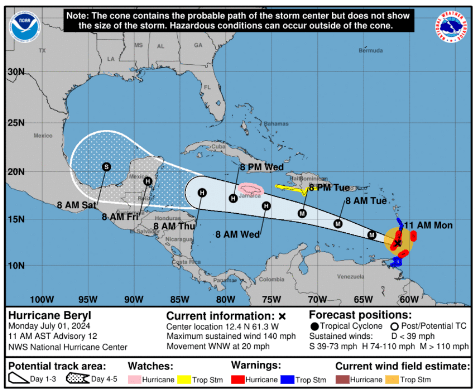
There is strong agreement among scientists that climate breakdown has increased the occurrence of the most intense and destructive tropical storms. Warming oceans, thanks to human-caused climate change, provide more energy to fuel these storms.
Political Will Needed
Ralph Gonsalves, prime minister of St. Vincent and the Grenadines, assailed the lack of political will in the U.S. and Europe to tackle the climate breakdown as Beryl hammered his nation.
“For the major emitters of greenhouse gases, those who contribute most to global warming,” he said, “you are getting a lot of talking, but you are not seeing a lot of action—as in making money available to small-island developing states and other vulnerable countries.
“I am hopeful that what is happening—and we are quite early in the hurricane season—will alert them to our vulnerabilities, our weaknesses and encourage them to honour the commitments they have made on a range of issues, from the Paris accord to the current time.”
The Supreme Court Weighs In
Right on cue, at a time when strong climate action is clearly called for, the U.S. Supreme Court last Friday sharply reined in the power of federal agencies, overturning a forty-year legal precedent known as the Chevron doctrine, which led courts to defer to the expertise of these agencies. As a result, hundreds of environmental and climate regulations promulgated by the Environmental Protection Agency, among others in the executive branch, will be open to legal challenges.
“Rules on water quality, smokestack and tailpipe emissions, biodiversity and the effects of climate change will now be relitigated and reinterpreted by the courts,” noted Richard Martin at GreenBiz.
Closer to home, as this year’s legislative session came to a close last month, Gov. Hochul made the controversial decision to pause congestion pricing in New York City after months of preparation to put it in place. In the ensuing chaos, other bills such as the NY HEAT Act and the Packaging Reduction Act failed to get a proper hearing in the General Assembly.
It was a disheartening display of the fossil fuel industry’s ability to bend state political leaders to its will, in part due to the flood of dollars it’s been handing out this election year.
The one bright light in Albany was the last-minute passage of the Climate Change Superfund Act. As reported above, the bill would charge Big Oil companies a total of $3 billion a year for 25 years to pay for costs associated with the destruction caused by climate change.
The legislation now awaits the governor’s signature. If enacted, New York will join Vermont as the second U.S. state with a law requiring fossil-fuel companies to pick up at least a portion of the tab for the huge damage they’ve knowingly inflicted.
In the face of so much demoralizing news, climate justice and environmental groups across the state will push hard this summer to make sure the governor signs this historic bill. If she does, it will mark a significant step towards holding climate polluters accountable. But don’t count on it; only intense, sustained grassroots pressure can make it happen. So, for the sake of future generations, don’t sit on the sidelines. It’s time to turn up the heat.

 Rebooting the Future